Quantic’s Weekly Roundup – July 2020 (3)


Quantic’s Weekly Roundup is a satisfying mix of the latest breaking news, business, STEM and social science stories. Here are your headlines for this week:

These are the droids we’ve been looking for: Heathrow Airport is now using disinfection robots to keep the airport safe and clean from the coronavirus. The robots, previously used in hospitals, use ultraviolet (UV-C) light to kill viruses on high risk touchpoints like bathrooms and escalators. 

Check out how current Executive MBA Student, Shane Gray, is helping #ChangeTheCourse by co-founding United-UVC, a company that provides businesses with UV-C light sanitation services to effectively destroy the DNA of COVID-19.

Wipes and sprays and gels, oh my: Skincare is a multi-billion dollar industry and since the COVID-19 pandemic took hold, soap and hand sanitizers have been essential in battling the virus’ spread. But could too much of an emphasis on sterility and purity come at a cost to our skin’s microbiome? Read on to get the dirt on soap.

Can’t touch this: From beaches, restaurants, to hotels, touchless technology, like QR codes, has drastically increased over the past months. Reservation apps, concierge bots and health kiosk screenings are just some of the digital additions the hospitality industry is implementing.

They won’t be sitting in a tin can: Virgin Galactic, part of Richard Branson’s Virgin Group, has revealed the final, sleek design for the interior cabin of its VSS Unity spacecraft. The cabin is designed to carry six passengers and has luxury top-of-mind.

Tracey Mullen, has been promoted to CEO at Abveris, a leader in contract research antibody discovery. Abveris Co-founder, Garren Hilow, voluntarily stepped down because he knew Tracey’s elite science background would make her the perfect company leader, while continuing to navigate the next generation of antibody therapeutics.


Quantic’s Weekly Roundup – July 2020 (2)

Quantic’s Weekly Roundup is a satisfying mix of the latest breaking news, business, STEM and social science stories. Here are your headlines for this week:

Taking Care of Business: COVID-19 has sparked a retail transformation in the UK, with more than 85,000 businesses launching online stores, according to new research from Growth Intelligence. Among the industries seeing the biggest transformation have been pharmacies, farms, fisheries and industrial food production companies.

Mask and you shall receive: Having trouble unlocking your phone with Face I.D. while wearing a mask? Creative New face coverings created by a San Francisco-based designer will remedy current challenges with facial recognition software. How? The company puts the “face” in face mask by customizing them to include the bottom half of the customer’s head.

What came first: the 3D-printed chicken or the egg? KFC is trying to create the world’s first laboratory-produced chicken nuggets, part of its “restaurant of the future” concept, the company announced. The chicken restaurant chain will work with Russian company, 3D Bioprinting Solutions, to develop bioprinting technology that will “print” chicken meat, using chicken cells and plant material.

Remote work has skyrocketed during the pandemic. Managers and executives around the world have been forced to adapt in order to lead their teams. Business leaders are calling for a significant public investment in programs that can upgrade the skills and training of American workers. 
Want to learn more about what Quantic students are saying about remote work and leadership during COVID-19? Read our survey results from more than 450 managers, executives and professionals.

MBA Student, Matthew Young, MD, Esq., has already achieved national recognition in the fields of patient safety and healthcare quality. He is now making a career transition to be one of the trial lawyers at Ross Feller Casey, LLP, where he will represent patients and families who have been harmed by the healthcare system, a cause extremely close to his heart.

Quantic’s Weekly Roundup – July 2020 (1)

Quantic’s Weekly Roundup is a satisfying mix of the latest breaking news, business, STEM and social science stories. Here are your headlines for this week:

The times they are a-changin’: In the era of COVID-19 where remote work is becoming the new normal, will major tech and finance hubs like London still be able to attract tech unicorns? Long-term, startups may be expected to grow and operate outside of established tech hubs.

Are you not entertained? Elon Musk’s Boring Company is calling on interested folks to build a tunneling machine that’s quicker and more efficient than current designs. Musk will launch his “Not-a-Boring Competition” in spring 2021. Everyone from businesses and engineers, to students and hobbyists are invited to get involved.

Singapore is planning to research and develop carbon capture, use and storage (CCUS) technology to reduce the climate impact from some of its most carbon-intensive industries. Companies including oil giant Chevron and concrete producer Pan-United are joining forces to develop technology that will prevent emissions from entering the atmosphere and could be ready within five to ten years.

One giant leap for artificial intelligence: NASA unveiled its next-generation space suit that will be worn by astronauts when they return to the moon in 2024. AI will help handle communications, oxygen supply, and temperature regulation, so that astronauts can focus on important tasks like building launch pads.

Codename Gryphon: Shares of Twitter closed 7.34% higher Wednesday after the company posted a job listing saying it was building a subscription platform under the code name “Gryphon.” Twitter is currently recruiting engineers to join this subscription team, with employees collaborating closely with the company’s payments team. There is already speculation that the company is developing a premium version that removes ads and affords certain customizations not available on the free product.

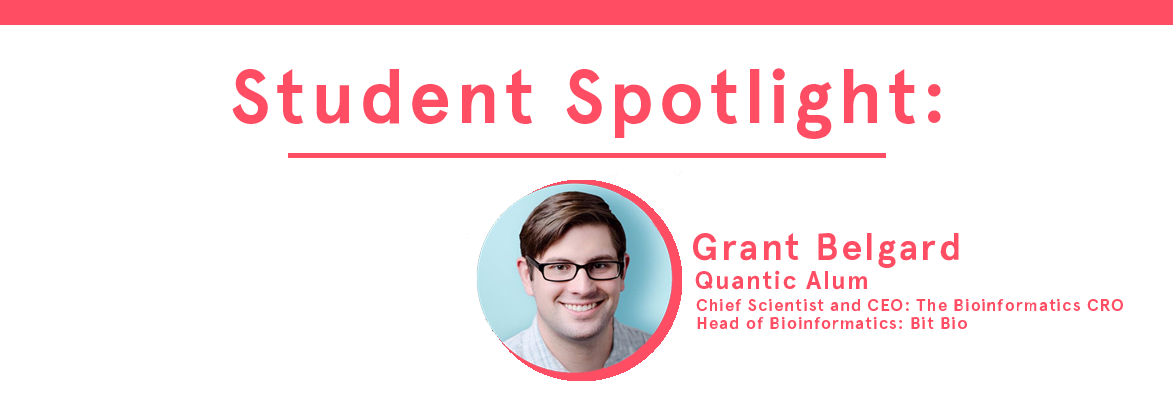
Quantic Alum, Grant Belgard, is the Head of Bioinformatics at Bit Bio, a startup that only needed three weeks to raise $41.5 million in a Series A funding round. The biotechnology company combines data science and biology to generate every type of cell in the human body. This will unlock solutions for tackling cancer, autoimmune diseases, and aid drug discovery.