How the Covid-19 pandemic is impacting the employment market for our community.
What we did
Quantic School of Business and Technology conducted a survey with students and alumni to better understand how the Covid-19 pandemic is impacting our community in regards to the employment market. Our goals were twofold: to better understand how and to what extent the pandemic is affecting our community, and to identify any strategies that could be of use. Here are our findings. Note: percentages reported below have been rounded to the nearest whole number.
Who responded
Our community is particularly aware of and involved in the employment market — one of the main reasons people undertake an MBA program is to move up in their career or enter a new field. And because of the level of seniority and achievement of our students and alumni, many are involved on the hiring side as well. We sent this survey out to 5,000 Quantic students and alumni, and heard back from 1,743 of them.
25% (443) were exclusively seeking employment 25% (433) were exclusively hiring 10% (177) were involved in both activities 39% (685) were involved in neither
We got broad industry representation with respondents from agriculture and the arts to travel, transportation and telecom.
What we learned
Sentiment
Overall, there was a drastic shift in how people feel about the state of the employment market.
The numbers have flipped: Prior to the pandemic, over 60% were optimistic about the market; after, that number has dropped to less than 10%. Prior to the pandemic, less than 10% were pessimistic; that number has soared to over 60%.
While that is a dramatic change, there are nuances as well:
18% of respondents didn’t change their overall opinion of the market (between 15 – 22 percent for each segment).
A very small percentage, 3.3%, revised their opinions favorably, going from pessimistic to optimistic or neutral, or from neutral to optimistic.
Those that were not actively involved in either hiring or seeking had the highest percentage of negatively revised opinions at 85% going from optimistic to neutral or pessimistic, or neutral to pessimistic.
When asked to comment on this there was a wide range of responses – here are a few insights. Note: quotes below lightly edited for spelling, grammar, and clarity:
Analytic Observations
I believe Covid-19 will affect the job market globally. Home working could help cross country hiring and balance/reduce the global unemployment rate. Exceptional times require exceptional measures.
I believe we will have to adapt to the new normal and that presents the opportunity for us to re-think our mid to long term strategy and innovate accordingly.
I felt the job market before the pandemic was already heavily over-extended. In my opinion, it was artificial and unnatural for a bull market to rage on for ten years with no significant correction. For over a year, I was convinced a recession was going to happen but did not know what would be the catalyst for it.
Emerging Economies
In West Africa, there’s a high probability of decreased funding in the immediate future to areas of public health and social intervention.
Personally, I feel this pandemic has come at a time when Kenya is already economically on its knees. This virus has killed our hopes of recovering from our former status, and we are expecting very many deaths due to starvation and suicide.
While I anticipate that developed countries will be fine in a few months, I feel developing countries (South Africa, Nigeria and India especially) will be suffering the effects of this pandemic for years to come.
Work/Life
It seems like parents are having an extra hard time with children at home and still trying to work. Schools here are having us home school so it takes a lot of time and energy. Productivity is down and stress is very high. It makes work and school difficult.
Industry Specific Insights
Our industry (management consulting / leadership training) has been hit hard. Especially at smaller consulting firms, we’re seeing a lot of lost revenue and layoffs as corporations are pulling from training budgets to shore up core operations in this downturn.
Our information technology field is much better than other markets and even possibilities to glow providing the solution during/after the Covid-19 problem.
Staying in healthcare I feel optimistic. Potentially switching careers I feel less optimistic. Overall, at peace.
The spread of the virus will change business dynamics, especially in the segments of the traditional heavy industry as steel for instance. The virus will also weigh on the overall economy much more than the 2008 crisis.
My law firm provides services to Fortune 500 companies, financial institutions, and high-net-worth individuals. We expect a downturn over the coming weeks (perhaps months) in demand for our services. This will therefore impact the need for professionally qualified staff.
Within the food industry, it’s going to be a very steep uphill battle to get things back to the way they were.
Strategy
We are a startup. We now aim to be self-sustainable rather than grow quickly because of the VC climate.
There is clearly a lot of unknown and I fully expect companies will either wait out or reevaluate their business model and roles needed to support it.
We realigned expectations and targets. The hiring policy reflects this, resulting in significantly reduced hiring for Q2 and Q3. We review strategy quarterly and depending on the situation in the coming months, further changes can happen, positive or negative.
Noticeable change in activity
The events are also altering how people interact. For seekers, 74% have noticed a change in hiring processes, including interview delays or cancellations, lack of announcements, or virtual interviews. Of the 428* people in that group, 24% of those who were seeking employment have decided to pause their search.
On the hiring side, 53% have seen slowed activity, either putting hiring on hold, canceling interviews, or instituting a hiring freeze.
Hiring Observations
With so much current uncertainty we are not making any major changes. We are taking a wait-and-see approach and minimizing expenses.
Our company (1500+) has instituted a hiring freeze, as have many others. Smaller firms in the industry are furloughing staff.
I am a hiring manager and have been told by my company that junior/associate level positions are on hold (I have one open position that has been temporarily frozen) until the “shelter in place” order is lifted and we can return to the office. Higher-level positions may still be filled, but all interviews will be over video calls.
Overall, I am very apprehensive to hire because I do not know the long term effects.
What can you do?
This data doesn’t exist in a vacuum. While the volatility is obvious and there’s been a clear change in sentiment, here are some ways we can apply what we’ve learned to benefit ourselves and the Quantic community.
Know you’re not alone.
One of the most important findings is that this is happening to everyone — even those who aren’t actively looking or hiring have felt the impact. 60%, of our community is directly impacted, and the other 40% are also noticing significant changes in the market.
Many of the comments express similar thoughts around the changes that are taking place, including delays in interviews, hiring freezes, and slowdown in overall market activity. Even if you are negatively affected by what’s happening, it’s not just you.
Leverage the network
If and when you become aware of opportunities, share them widely. You never know who’s looking or who you might be able to help. If you hear of something you think might be a perfect fit for someone in particular, let them know about it, even if you’re not aware they’re on the market. You never know if they are looking for an opportunity. In addition to your regular channels, you can share opportunities and reach out directly to Quantic classmates and alumni in the online student portal.
Prepare for opportunity.
There is still some activity happening: 15% of those who are involved in hiring indicated that they have not changed anything in regards to hiring or are still hiring as usual, and in a follow-up survey, 14% of respondents have increased the rate of hiring or are backfilling positions due to quarantine during this time. If you do want or need to make a change, do what you can to optimize yourself as a candidate.
Research the market. Analyze job announcements in your field and identify the core competencies that are in high demand. Review your history for ways that you’ve demonstrated those skills in your career.
Update your resume. Make sure your Quantic career profile, resume, and LinkedIn profile are up to date, and draft a cover letter that you can customize as needed.
Professional Development. If you have an experience or skill gap, now might be the time to fill it through education, or volunteering for a project at work to learn a particular technique (Remote project execution – check!)
Proactively contact your references. It’s always easier to reach out ahead of time, stay in touch and catch up without pressure so that there’s no rush when the time comes.
If you have any questions about this survey, or ideas for Quantic that you’d like to share, please get in touch.
* Percentage based on round one of survey respondents
We are constantly amazed by the innovative spirit of our Quantic students and alumni who are pioneering solutions for today’s complex challenges. It’s this same spirit that drives us to push the boundaries of online education — to make it higher quality, more accessible, and more effective. You may be familiar with how we’ve innovated in graduate school education with Quantic, but did you know that Pedago (the company behind Quantic) is launching another school? We are thrilled to announce that we will soon be launching Miya Miya, a platform enabling mobile education to #ChangeTheCourse for young students in need.
Miya Miya is a free, online, mobile-first school empowering disadvantaged Jordanian youth and Syrian refugees to obtain a high school STEM education and skills that are vital to their future career prospects.
This program aims to supplement classroom teaching for children and young adults who have been unable to access a traditional education due to hardship beyond their control. Like Quantic’s platform, the app-based curriculum uses active learning, in which students are prompted every eight seconds to engage. Because it is mobile-first, students can learn wherever and whenever they’re able to.
The concept of Miya Miya was conceived as a digital curriculum delivery solution that caters to refugee children and youth, but will eventually be made available to all learners with content that is adapted to the national curriculum of host countries.
The program will run for a period of three years, and is in line with the Jordanian Government’s priority to tackle the low passing rate of ‘Tawjihi,’ the General Secondary Education Certificate Examination. According to a UNHCR report, only around 20% of secondary-school-aged Syrian children are enrolled in formal education, while the rest mostly work to support their families. Not attending secondary education prevents students from passing the final exam and receiving the necessary school certification to gain access to the job market, or study further.
“We are delighted to collaborate with Dubai Cares, Questscope and the Queen Rania Foundation to make our breakthrough technology available to Jordan’s most vulnerable students” said Tom Adams, Pedago and Quantic Co-Founder and CEO. “Miya Miya is designed to be the premier solution for delivering Tawjihi-based instruction, and it works on smartphones.”
While Miya Miya will initially launch in Jordan, Pedago’s mission is to bring this affordable, accessible, and impactful education to all children around the globe. Through this school and other programs, we hope to continue to #ChangeTheCourse of traditional learning and help tomorrow’s leaders achieve their educational and career goals.
South32 Connectivity & Cyber Security Program Manager, Barbara Meyer knew she wanted to earn her MBA. Being a working mom, she needed a program that would fit into her busy schedule. Here is a note on her Quantic experience, why she believes all moms can achieve their professional goals, break down stereotypes, and become rockstar role models for their children:
Moms should feel welcome in MBA programs and not feel held back because child-bearing years and MBA programs coincide. Furthermore, moms should not be left having to choose between a family and furthering a career, through study. Although business schools have been encouraging more women to join master’s programs, they still have not reached gender parity.
As a single mother of a toddler, I found myself in the middle of this dilemma. I realised that in supporting my daughter’s growth as an independent, strong, educated woman, I needed to be a role model for her. I needed to be the best version of myself and put myself in a position to advance my professional career. The tricky part was how to accomplish this without feeling like I was relinquishing responsibility and missing precious time with my daughter.
As an IT program and project manager, I often thought that an MBA might provide me with a well rounded business foundation, which might be the next step to advance my career. However, everything I knew about traditional MBA courses seemed to be daunting: excessive cost, fixed on-site lectures or block periods, lengthy course durations, and sacrifices beyond my appetite. This was true until I came across an online invitation to an MBA with Quantic.
I was hooked. Everything I hoped to have in a MBA course was packaged into the Executive MBA online offering: it was not only flexible, mobile and affordable, but also pedagogically sound and ensured active student participation (the first 11 years of my career were spent as a STEM teacher), a global network of alumni, and best of all, it could be completed in 15 months.
In the past eight months of studying, I found that the pace and schedule were manageable, while balancing my everyday life. I am very privileged to have flexible working hours and lots of support from my employer, South32. With the mobile application available 24/7, I used every spare five minutes to complete a learning unit. This happened during lunch time, sitting somewhere waiting in a queue, 15 minutes after I woke up or went to bed, and especially the time at night when the little one would wake up and I couldn’t fall back to sleep (don’t all moms know this midnight joy?). Thus far, it has been an enjoyable, highly interesting journey and well worth the effort. Even in this short time, I have been able to incorporate my learning into my day job and have applied some of the principles to make innovative changes.
Were there difficult times? Yes, especially during the time that we were both sick. Are the exams and assignments challenging? Yes, you must put in extra effort during exam week. Is the Quantic staff helpful and supportive? For sure, they know that students are human, life happens, and that there is always a plan to get back on schedule.
The most pleasantly unexpected experience with my Executive MBA was during one of my exams, as highlighted in an email I wrote:
“I wanted to share with you a precious moment and why I love the format of the Quantic EMBA. I have been working diligently during the hours that my daughter is asleep (because I do not want to impact the little time we have during the day) and thus far, it has worked very well. I try to do most of my exams early in the morning, before she wakes up. At 5:15am, I settled in behind my machine, ready to take on the Operations and Project Management exam. Instead of her waking up as normal around 7am, she woke at 5:30am. Needless to say, I had a curious, happy-to-be-alive, wanting-to-be-with-mommy, toddler. I almost had a panic attack but decided to make the most of the situation.
As she played, I finished my exam through all the questions, requests and played along. The picture says it all. Although it took a little longer, the end result was a whopping 93% and a very happy little girl. I can’t think of a better result :-).
I hope that it can be an encouragement to more mothers out there; it is possible to complete the Quantic EMBA, tend to your family and work full-time. Thank you again Quantic for enabling continuous studies and making it possible to have fun doing it.”
It is my hope that more women will join the increasing network of MBA alumni. Quantic has gone the extra mile to make moms feel welcome in the Executive MBA program. Quantic has designed their Executive MBA program in such a way that a mom is not trapped in the compromises of choosing between career advancement, further studies and raising a family. Moms, let’s go forth to equip ourselves for professional success, model an example for our children, and help to break down barriers and stereotypes with an Executive MBA.
There are hundreds of business degree programs offered globally. Navigating the business school landscape is challenging. There are tons of options.
This article will put you on the right path.
At Quantic School of Business and Technology, we understand how big this decision is. After all, picking the right MBA or Executive MBA will propel your career forward
To help equip you with the information you need to make an informed decision, we’ve developed a program comparison guide.
Use it as a tool to determine which program is best suited to your unique situation and desired career outcomes.
MBA Programs
MBA (Master of Business Administration) programs are most commonly suited to those with less work experience — often, those who have recently graduated. These are people who require more introductory courses in business administration.
Therefore, MBA candidates are commonly required to maintain a heavier workload and a more demanding schedule during their full-time studies.
By working on a full-time schedule, MBA programs tend to offer more freedom within the denser school schedule. For instance, selecting electives or choosing a subject specialization or “track.” (Although this is not entirely uncharacteristic of Executive MBA programs, it’s rarer.)
EMBA Programs
Executive MBA (Executive Master of Business Administration) programs are developed with working professionals in mind. Those who want to keep working full time, while advancing their skills.
Some schools offer specializations in industries like healthcare and technology; the Quantic Executive MBA’s award-winning curriculum offers elective specializations in management, leadership, entrepreneurship and advanced strategy.
MBA and EMBA Statistics
A good approach to researching which type of program is right for you is by looking at MBA and Executive MBA programs by the numbers—or in business terms, through a cost-benefit analysis.
Cost of an MBA vs. an EMBA
Approaching your selection of a program through a financial lens is one of the most common methods of analysis. Pursuing an MBA or Executive MBA costs time and money — it’s a commitment that’s worth taking the time to think about in-depth.
The key lies in determining which type of program is best suited for where you are in your career, and which stands to be of most benefit to you in terms of career growth. One major difference between Executive MBA and MBA programs is the format of their delivery and associated costs.
EMBA’s
Executive MBA programs often allow students to keep their jobs while pursuing their degree. This means that Executive MBA candidates can bring in a steady income while they study, thus increasing the ROI of their EMBA degree by reducing its overall cost.
As per Noodle’s findings, an EMBA can be obtained for a relatively affordable price of $25,000. However, the majority of programs charge a minimum of $60,000, with some programs costing significantly more, with the most competitive EMBA programs exceeding $200,000.
MBA’s
MBA programs, on the other hand, are commonly delivered in a format that requires candidates to take a hiatus from their careers, putting income-earning on hold. They may also require students to incur additional living costs (like room and board), if they have to relocate to pursue the degree.
Zippia has gathered some MBA cost statistics to aid you in making a decision. On average, the cost of obtaining an MBA is $61,800. Nevertheless, this amount can vary significantly from one student to another based on factors such as the school attended, the amount of financial assistance received, and other considerations. As a practical matter, an MBA could cost anything from $30,000 to more than $200,000.
Quantic’s tuition fees are just $950 per month over the 15-month duration of the programs. Full detail here.
Don’t forget about opportunity cost!
An alternative method for deciding between an MBA or EMBA program is to evaluate the opportunity cost. Opportunity cost is the value of the best alternative that is forgone when selecting a particular option. For individuals pursuing an MBA or EMBA, opportunity cost is measured by the potential income and career growth that could have been attained during the time spent studying.
For example, an Executive MBA student who works while pursuing their degree will sacrifice some leisure time, but they will continue to receive an income that can offset the program’s cost. In contrast, an MBA student who takes a break from their job will forego the income they could have earned during that period, as well as any potential opportunities for career advancement.
Therefore, when deciding between an MBA or EMBA program, it is important to consider the differences in opportunity cost. An Executive MBA program may be more financially feasible for those who wish to continue working while pursuing their degree. Meanwhile, an MBA program may be more suitable for individuals who can afford to pause their career for a period to obtain a degree that offers a higher return on investment in the long term.
Average Age
Executive MBA programs typically attract more experienced professionals (with the average EMBA applicant age being 38), with greater work experience. They have competitive résumés and are poised to move into more senior leadership roles with their current employer, change industries, or perhaps, branch out on their own to start a new company.
MBA applicants, by contrast, tend to be younger (with the average MBA applicant age being 28) and have their applications reviewed on the basis of academic credentials. That said, many programs, including Quantic’s MBA, value unique and sometimes less traditional backgrounds.
With either program, there are always outliers so one of the most useful ways to determine which program is best for you, is to consider the kind of peers you stand to gain. Will learning alongside those who are just starting out in their careers challenge you? Will you be able to contribute to your cohort in a way that’s valuable and challenges others? These are the types of questions that can help you choose a program that stands to benefit you the most.
Work Experience
Each type of program is delivered with a unique purpose and student needs in mind.
Executive MBA candidates often compete for admission on the basis of their work experience rather than academic scores. And they are typically required to apply with a minimum of five years’ work experience (though their average work experience is 14 years) and demonstrated managerial or leadership roles.
MBA applicants, on the other hand, typically compete on their GMAT and academic credentials, as well as their work experience to-date. Quantic’s MBA and Executive MBA, however, do not require students take the GMAT. Both programs require a bachelor’s degree.
Program Duration
How long an MBA takes to complete depends on the type of program you choose. Executive MBA programs vary in duration (between 18 and 24 months, though some take as few as 15 months, like the Quantic Executive MBA); more traditional MBA programs, by comparison, usually take more time, often requiring 4 semesters of study (following a typical university schedule), amounting to two years total (24 months).
Some online MBA programs are shorter; for instance, the Quantic MBA takes 15 months to complete. Though, this is not an indication of a lighter curriculum — Quantic’s program length is a direct result of its proprietary pedagogy that uses Active Learning to teach. They’ve done away with time-consuming lectures entirely and deliver content via fast-paced, interactive, and personalized modules. Quantic’s MBA also has the added benefit of a built-in career network, too, so you’re likely to put your skills to use immediately.
Company Sponsorship
Another stark contrast between the two program formats is funding.
It’s far more common for Executive MBA candidates to be funded by their employers, while MBAs are typically self-funded.
This creates a landscape in which MBA students often have more options for applying for scholarship funding, should they invest their time in this additional research and application process.
It should be stated, though, that over the years schools have begun to offer more Executive MBA scholarships in response to a changing trend whereby EMBAs are seeing less employer sponsorship and need to be self-funded. Quantic’s Executive MBA and MBA, already just a fraction of the cost of other programs, offer candidates additional resources for employer-funded tuition sponsorship.
And of course, even for students who are company-funded, conditions may apply, such as requiring that Executive MBA graduates complete a term of employment with the sponsoring company after graduation. Additionally, most require that the school is accredited (Quantic is accredited).
Lifestyle
A student’s lifestyle is heavily influenced by the program they choose to undertake.
Since Executive MBA candidates tend to have significant and continual work obligations alongside their academic pursuits, course schedules will typically run outside the usual 9-to-5, during what many working professionals consider to be their leisure or personal/family time. This, of course, will also have significant social implications—although course attendance and networking with their newfound community can help fill that social gap. The latter is true for MBA candidates too, who will undoubtedly spend much more time in person with classmates, whether in the classroom, in the library or at networking and MBA events on evenings and weekends.
Because Quantic’s programs are entirely online, it enables both Executive MBA and MBA students to learn on their own schedule, with most students spending between 5-15 hours a week on course work. And with group projects, virtual classrooms for discussion and debate, and optional in-person meet-ups and conferences, there are plenty of opportunities for networking and connecting with fellow peers.
Executive MBA Benefits
Learning Experience
The “E” in EMBA often has prospective students mistaking the EMBA as a more “elite” form of study in comparison to the “more basic” MBA program.
The reality is the two programs are simply designed to suit different kinds of students. They offer different curricula and educational experiences. While much of the core curriculum is shared between the MBA and EMBA, Executive MBAs offer more in the way of advanced courses in C-level management, strategy, and leadership.
MBA programs tend to include more introductory courses for those with less managerial experience with the option to specialize in more focused courses, similar to those seen in an EMBA curriculum.
Due to constraints on EMBA candidates’ schedules, EMBA programs also offer more classes on the weekends, on some weeknights, and in more condensed formats.
This results in a program that tends to offer fewer elective options than a typical MBA. However, EMBA cohorts tend to have students from all kinds of backgrounds who bring different experiences, perspectives, and knowledge to the table, which massively enhances the learning experience in its own unique way.
Salary Increase?
A Master in Business Administration program offers candidates significant monetary returns upon graduation.
While salary increases vary by candidate and industry, according to the 2019 Executive MBA Council Survey, EMBA graduates saw an average salary boost of 13.5%.
While this number is lower compared to MBAs (who by virtue of being younger and earlier in their careers have more to gain in terms of earning potential), the same survey also saw 53% of EMBA candidates reporting that they received more responsibilities, with 40% of those surveyed reporting that they received a promotion during the program.
There’s no doubt that a degree of either type is well worth pursuing.
Skills Acquired
The skills acquired during study vary by program, depending on the specialties and concentrations chosen, as well as the type of program.
The primary skills gained from an EMBA degree are those related to effective leadership, strategy and corporate governance.
According to the 2019 Executive MBA Council Survey, EMBA graduates reported learning skills that included strategic thinking, decision-making and leadership, in addition to gaining insight into economic factors affecting businesses today, as well as accounting skills and financial acuity. Such skills can help candidates who wish to take their consulting work to the next level, as well as those wanting to move into executive leadership roles and the C-suite within an organization.
The Quantic School of Business and Technology EMBA prepares students to meet a variety of career aspirations and goals by developing advanced strategy skills, skills in leadership.
Full-Time Job Placement
The most competitive degrees have gained that reputation by way of the opportunities they afford their graduates, the network and career support. Programs with a strong career network offer candidates avenues to new jobs as well as mentorship opportunities. These are particularly beneficial to students who are hoping to change industry.
MBA and Executive MBA Admission Requirements
Because MBA and EMBA programs tend to attract candidates at different stages of their careers, they often differ in their requirements for admission. For instance, most MBA programs require a bachelor’s degree at a minimum. Whereas EMBA programs require more work experience (typically 10 to 15 years).
Since most Executive MBA candidates already have a strong foundation of business experience,, standardized tests like the GMAT (Graduate Management Assessment Test) are less commonly required for admission.
Conversely, most MBA programs put more emphasis on GMAT scores when reviewing candidates’ eligibility, and, though some programs do waive it, it’s important to know whether you need a GMAT for the MBA as well as the minimum score required to apply. While many Quantic students have taken the GMAT (and scored on par with students at top schools!), it’s not a requirement for admission.
In the MBA world, application essays are also weighted quite heavily in admissions and some applicants might vie for a spot through more creative approaches (some schools even require video essays). And though most global programs are offered in English, students who aren’t native English speakers are often required to get a minimum score on a standardized language test, such as the TOEFL (Test of English as a Foreign Language).
In terms of recommendation letters, both the MBA and EMBA programs often require at least one, if not several. For the Executive MBA, where work-life balance is important, candidates are also required to supply written proof that their current employer actually supports their pursuing the degree. This is true for EMBA applicants who are being sponsored by their employer to study, as well as for those who aren’t, because chances are that candidates will have to do some coordinating with their company (including potentially taking some time off) to complete the program. Quantic’s employer-funded tuition reimbursement program makes this conversation easy with a downloadable guide.
Choosing the Right Program for Your Lifestyle Goals
The delivery format of a business degree can have huge implications for the success of a candidate during their studies as well as beyond graduation.
In-person programs provide the traditional grounding of an academic environment, but this comes at a premium — higher tuition costs, relocation, and putting a budding career on hold to attend full time
Luckily, competitive online programs are on the rise. They are changing the landscape and reducing the barriers to entry. Some programs even incorporate cutting edge technology into their Learning Management Systems. For some candidates this is a better option. It increases their competitiveness in the job market,but doesn’t involve a massive investment of time and money. .
Traditional (On-Campus) MBA/EMBA Programs
Residential programs are a suitable choice for students who wish to be more fully immersed in campus culture.
On-campus programs also offer candidates more opportunities to network and socialize with their cohort, professors, and the wider academic community outside of their structured MBA or EMBA schedule.
Part-Time MBA/EMBA Programs
A part-time program, whether an EMBA or MBA, is best suited to students who wish to continue working while earning their degrees. Coursework for these programs is most often scheduled on weekends and weeknights. Of course, those choosing this option may find they require a high level of discipline, as their “free time” will be largely occupied by coursework.
Those with children or other personal commitments and responsibilities may have to assess their priorities during their course of study to ensure they stay organized. Quantic’s EMBA and MBA, while they are full-time programs, are mobile-first and self-paced — affording students greater flexibility that enables them to continue working and balancing personal commitments while they earn their degree.
Online MBA/EMBA Programs
More non-traditional programs, like those delivered online, are gaining popularity, as they offer more flexible schedules and learning environments for the modern student—and with much lower financial barriers.
By removing overhead costs, these programs can offer a valuable curriculum, experienced faculty, and deep industry expertise at a fraction of the cost of an in-person program.
By virtue of not being overseen by large regulatory bodies, the curriculum of these programs is often more customized and responsive to the changing needs of industry, and not simply academia.
For example, Quantic EMBA cohorts follow a guided sequence of coursework especially developed by a team of specialists who collaborate with professors from top elite business schools to bring the program to life. Students are offered bite-size lessons and individualized feedback (every eight seconds!) so that they feel supported throughout the course of their studies, in addition to online and in-person group work and networking opportunities that round out the program.
Today’s business professionals are already seeing the signs of a growing remote workforce, heightened interconnectivity, more collaborative tools, and changing operational structures that are altering how we do business globally.
More flexible online-first programs can be seen as an extension of these wider trends and can, simply by virtue of their delivery format, offer candidates unique insights into the evolving contexts of work as well as the skills necessary to succeed as leaders in this changing environment.
Summary: Choose the Right Degree for Your Career Growth
Is a particular MBA or EMBA program right for you?
That’s the fundamental question.
To answer it accurately, you need to look at your own eligibility first and foremost (e.g. career maturity, academic experience and work experience).
After that… you should evaluate your own ability and desire to commit to it.
If you still want to do one, then the delivery format is important.
Pick one that works for you.
Your own learning style, lifestyle habits and personal responsibilities and commitments — these things play a large role in what you get out of whatever format you choose.
The business degree landscape is full of success stories.
In today’s job market, having a competitive resume means having solid work experience and degrees from top educational institutions. However, there comes a time when many people are forced to choose between continuing their studies or adding to their work experience in order to advance their careers. Fortunately, Quantic’s mobile-friendly MBA allows students to do it all.
Alumnus Patrick Glauner is a perfect example of this. While he was earning his MBA, Patrick was also working towards his PhD in computer science.
Patrick graduated as Valedictorian from Karlsruhe University of Applied Sciences in 2012, where he earned his B.Sc. in computer science. At that time, he was hired by the European Organization for Nuclear Research (CERN) in Geneva, where he worked for 3 years. He then went on to earn his M.Sc. in machine learning from Imperial College London in 2015 and his PhD in computer science from the University of Luxembourg in 2019. He first became interested in computer science as a kid, and taught himself how to program, and later, spent time in high school reading books about data structures and algorithms.
While he was in the final year of his PhD studies, Patrick saw that the depth and focus of the degree could lead to a narrow career trajectory and he was unsure if being a specialist was right for him. That’s when he decided that he wanted to earn his MBA — to gain knowledge that would position him to move into management roles where he would oversee cross-functional teams and fast-forward through speed bumps slowing others down. With this, he chose to enter the workforce and secured a management job with a major mechanical engineering company, Krones.
“Having done the MBA was certainly very helpful from finishing the PhD and to going into management in a major company,” said Patrick. He went on to say, “I felt that I was only able to do that so quickly because I had done the MBA in addition to my technical training.”
When Patrick was able to complete his PhD, he became a full professor of artificial intelligence at Deggendorf Institute of Technology in Germany at the young age of 30. He became a professor after discovering an affinity for teaching while working as an adjunct lecturer. However, he witnessed other professors’ careers slowing down at points when real world work experience became essential to have in order to teach certain topics. He decided that continuing his work in artificial intelligence was vital to being at the top of his game as a professor.
“When I knew I wanted to do a professorship, I knew I wanted to do something on the side that kept me linked to the real world. I wanted to work with companies and not just write papers,” said Patrick.
Patrick started his own artificial intelligence consulting company, skyrocket.ai, with the purpose of teaching company executives about artificial intelligence and helping them develop strategies to implement it effectively. As an expert on AI technology, Patrick believes that many small to mid-size companies in almost any industry could benefit greatly if AI is implemented properly. He also believes that if companies don’t invest in AI, then they could very well be out of the market within the next 10 years.
However, Patrick also said that AI could have negative effects for individuals. He brought up the dilemma that companies face when deciding to use AI or a human.
“We’ve seen automation for a long time. But what had happened in the past is that we automated repetitive tasks,” said Patrick. “Humans are great at making very different decisions all day long, but it is also very slow. AI enables us to automate that kind of work.”
When Patrick had just started his company, he quickly secured a major client. The board of a top-30 company in Germany with over a 100,000 employees hired his company to put on a workshop about AI to help them develop strategies and implement them. Starting a business is no small feat, and having a major company be one of your first clients is a testament to Patrick’s expertise. But how did Patrick manage to do all this so quickly?
“One of the things that proved to be very helpful was that I had experience in the industry and that I’ve worked in consulting before. It made it very easy to start my own business because I had a network, the skills and expertise, and I knew how to sell things,” said Patrick.
In addition, his newly acquired knowledge from Quantic’s MBA was beneficial, as it gave reliable support for his already acquired industry experience. Patrick’s advice for up-and-coming entrepreneurs? Have a clear business plan and make sure that you build trust with other businesses. Patrick stressed the importance of prior work experience and how that plays into building credibility and a positive reputation. His advice once again demonstrates the importance of the intersection of education and extensive work experience.
Patrick has published many papers and articles from his extensive research in academia. A major study on AI by McKinsey cited his research, and a journalist from New Scientist interviewed him about his AI technology research. However, when asked about what accomplishments he’s most proud of, Patrick immediately responded that the recent birth of his child is his crowning achievement. Congrats to Patrick and his wife, a fellow Quantic student, on their new baby!
With every day bringing news of how the COVID-19 pandemic is impacting global health, the economy, travel, and work, an MBA or Executive MBA program shouldn’t cause additional stress. At Quantic, we are fortunate in that our programs and required peer collaborations are entirely online, and our staff is well accustomed to working remotely. As such, our programs will continue without interruption.
We have, however, instituted changes to ensure the safety of our community and to be there to support our students and applicants, as well as the broader global community, in whatever way we can.
As many have been affected financially by the pandemic, we will be increasing both the number of scholarships we award, as well as the amount. We offer both need-based and merit-based scholarships for our Executive MBA. As always, our MBA is completely free to those who are admitted. For additional financial support, please inquire about employer-backed tuition reimbursement here.
Free open courses: We offer several free open courses available to the public. Courses include Business Foundations, as well as a handful of other MBA-level courses like Blue Ocean Strategy. Just sign up and visit your Dashboard to start learning right away.
Extensions or Deferrals: If you are admitted to one of our programs but need an extension or deferral to another cohort due to circumstances related to COVID-19, just let us know and we’ll do everything we can to accommodate.
Events: Until further notice, we have canceled in-person meet-ups and events/conferences. Instead, we’ll host online events to enrich the curriculum and bring students from all cohorts together.
Registrar: If admitted, we request official transcripts from your previous schools. But due to school closures and restricted movement, it may not be possible to obtain transcripts at this time. If this is the case, we will work with you to make alternate arrangements.
For the past seven years, Quantic has been a pioneer of online, mobile-first graduate education, enabling students to learn wherever they are and according to their own schedule. While this is a scary time, we remain optimistic. As many of us in the education sector adapt and shift into roles that solve the challenges we’re all facing, we will continue to leverage our resources and platforms to help our fellow learners.
There are many reasons why students choose to earn their MBA from Quantic. Quantic offers innovative degree programs that are online and mobile, so students can learn wherever they want. And for many, the highly selective and global nature of Quantic’s admissions is a major draw—all in service of building an impressive and engaged network of students and alumni around the world.
Unlike many online education platforms, Quantic provides its learners with myriad opportunities to meet and connect. Quantic’s Network allows students and alumni from the MBA and EMBA programs to discover students located in their geographic area and who share similar interests. And with the recent addition of the Network Events tab, students can now do more than just communicate on the platform; they can also connect in person.
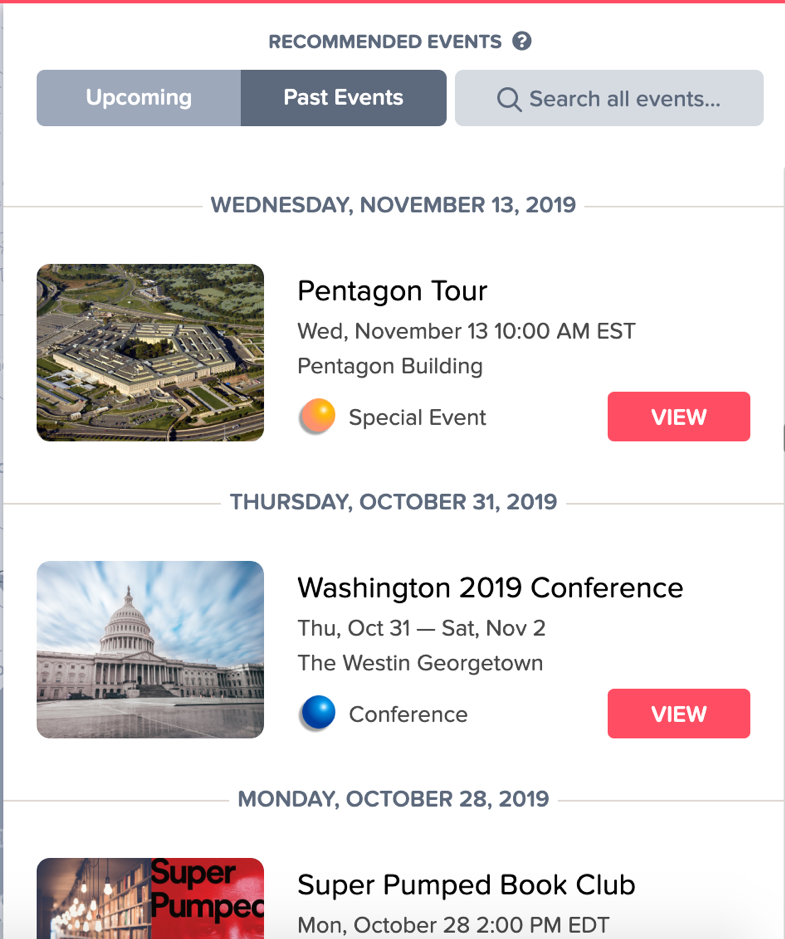
In the Events tab, students can peruse the many community events Quantic has to offer. These range from in-person conferences, meetups, and special events to online orientations and book clubs, where students discuss the monthly book pick over video chat. Some of the most significant networking opportunities in Quantic’s highly engaged network are the in-person meetups and conferences held in cities around the world.
Quantic meetups allow for students to make real-world connections with their classmates. Meetups range from sharing dinner with one another at local restaurants to a special event such as touring Facebook’s NYC Headquarters. Recent meetup cities include Toronto, Berlin, Taipei, and Sydney. Quantic has hosted meetups in over 40 cities in 2019 alone, including trips to tour the United States Capitol building and London’s Houses of Parliament.
While meetups primarily bring together students and alumni who live in the same city, the weekend-long Executive MBA conferences draw students from (nearly) every continent. Conference itineraries vary from city to city and provide unique opportunities for students to experience and learn about the city they’re in. In 2019, conferences were held in Washington D.C., Singapore, and Dublin, with the next scheduled for Spring of 2020 in Copenhagen.
Conferences provide an excellent opportunity for students to not only network with other students and alumni, but to learn about real world businesses. Students partake in workshops, collaborate on case studies, hear talks from prominent business leaders, and visit successful local businesses to gain new perspectives and insights on how businesses are run across industries and in different countries.
Why does Quantic put so much emphasis on students networking virtually and through conferences and meetups?
According to Alexie Harper, Quantic’s Co-Founder and Chief Academic Officer, “Networking provides students with new career opportunities and allows them to meet the right people who may later provide them with career resources and support when they need it.”
Networking can even be a source of inspiration—presenting different paths of success that others have taken and that you have perhaps overlooked. Particularly in mid-to-senior level management roles and for students embarking upon an entrepreneurial endeavor, networking is a vital component for advancing one’s career, avoiding stagnation, and making the most out of opportunities that arise.
There’s evidence that networking plays a major role in hiring. The chart below from SilkRoad’s 2018 research report on hiring sources shows that referrals were the largest source of job hires by a long shot.
This chart from Statista shows that friends and professional connections provided the most new opportunities for job seekers in 2018.
Through student projects that encourage students to work together to solve business issues, student meetups and events around the world, and the Network tab features, Quantic students are encouraged to build meaningful connections.
So go on. Meet new people, reconnect with old acquaintances, and grow your network. You never know where it could lead.
Let’s face it, earning an MBA can be a big ask. Sure, it can help advance your career and provide the leadership skills and professional network you need to get to the top of your field, but traditional MBA programs often require a two-year hiatus from your job and can include a $200k price tag. This is a tall order for many working professionals in the United States who are already suffocating under the weight of student debt.
The financial aid debt clock shows a nationwide deficit of almost $1.7 trillion, and we are beginning to hear dire stories about the impacts of student debt on family formation, small business creation, home purchases, and retirement. And in Europe, markets across the EU have been clamoring for MBA grads since 2010 when education requirements were standardized in the Bologna Process. Embarking upon a two-years master’s degree program after earning a bachelor’s has become the “standard across the continent.”
The bottom line: More and more employers want you to earn a master’s degree, but doing so could have a sizable impact on your earnings, livelihood, and even your future family.
This is where Quantic School of Business and Technology comes in.
Quantic’s online MBA program was developed by leading academic and business minds and designed to accommodate working professionals. It is a fully online program so yes, it is flexible and convenient. But that is not what makes it unique. Check out the 10 things you didn’t know about Quantic’s programs.
Quantic’s Technological Advantage
1. Executive leaders were key players at Rosetta Stone
Quantic School of Business and Technology brings together the collective knowledge and experience of Rosetta Stone’s former CEO (Tom Adams) and executive leadership team, including Co-founders, Alexie Harper (Chief Academic Officer) and Ori Ratner (CTO), as well as VP of Admissions, Matt Schenck. If you have ever used Rosetta Stone, you know its interactive language-learning technology set the bar for usability and knowledge retention back in the early 2000s.
What this means for students: Quantic’s leadership pedigree is unmatched in the educational tech space. It is an organization that understands wholeheartedly the tools that best allow students to learn, retain, and master educational material.
2. Active learning increases engagement and retention
Quantic has built a more efficient and engaging online teaching model. The company has witnessed the shortcomings of MOOC programs and the inefficacy of “video professor” lectures that so many traditional universities have used to increase their online presence.
In a recent independent study, Quantic learners outperformed their counterparts from Harvard, Duke, and Wharton in standardized tests covering accounting and finance. A second study comparing Quantic learners to those enrolled in popular MOOCs, Khan Academy and edX, reported Quantic students scoring significantly higher on statistics testing while spending 67 percent less time on the platform.
How are these results possible? Quantic designed its MBA programs around “active learning,” an approach that requires active participation (vs. passive) of the student, prompting them to frequently engage with the content. Students are given immediate feedback based on their performance and the material is built on previously learned subject matter.
Active learning isn’t a new concept, in fact, it was pioneered by Maria Montessori in early childhood education, Maximillian Berlitz in immersion language learning, and Shinichi Suzuki in music study. Its benefits and efficacy have been exhaustively studied and are proven to be more effective than passive, lecture-based learning alone.
What this means for students: Quantic’s MBA program was created using pioneering learning methods and designed to keep students more engaged, learn subject matter faster, and retain material more efficiently.
3. Mobile-first means access to cutting-edge material
Quantic School of Business and Technology conceived and built its MBA and Executive MBA programs as mobile-first options from the outset to provide students with a better learning experience that was conducive to their busy schedules. Of course, it is convenient to be able to take classes via your mobile devices, but the mobile-first approach also provides an academic advantage.
Quantic’s agile platform allows for rapid development of new, cutting-edge courses in innovative fields, while traditional MBA programs typically develop curriculum in emerging fields at a slower pace due to bureaucratic and logistical hurdles. This sluggishness to adapt is why some have argued that traditional schools are teaching skills more apt for 20th century businesses than today’s. On the other hand, Quantic recently began developing a computer science degree program as well as courses on blockchain, cultural intelligence, and design thinking. What’s more? Graduates have lifetime access to all existing courses and new courses added to their designated program as they’re released.
What this means for students: Quantic’s mobile-first, tech-driven approach enables it to quickly adapt to offer courses in emerging fields so you are always at the forefront of today’s business and tech environment.
Quantic School of Business and Technology Accepts Only the Most Committed Learners
4. Ultra-competitive admissions cultivates a powerful student and alumni network
Quantic’s philosophy is to attract the best and brightest business minds and give them the tools they need to build a better world through intelligent and modern business practices.
Many online educators have admissions policies that are designed to attract everyone and while they may be well intentioned, open or lax admissions policies ultimately hurt the students enrolling in the program, as evidenced by plummeting graduation rates and poor outcomes. Quantic is built differently. Its aim is to provide students access to an ecosystem of the world’s leading professionals and cultivate an environment where students can connect, collaborate, and solve complex business problems. The goal is for each student feel part of a tight-knit community of learners who help motivate, challenge and learn from one another.
What this means for students: Strict admissions standards ensure that students admitted to the program are deeply committed to their studies, capable of completing and excelling in the coursework, and can bring valuable contributions to their cohort.
5. Students Graduate in About a Year
Quantic’s degree programs are fully online and designed to give working professionals the skills and experience they need to achieve their goals and advance their careers. Both the MBA and Executive MBA take about 15 months.
The secret to Quantic’s reduced time to graduation is twofold: First, the active learning model makes coursework not only more enjoyable, but it’s more effective and faster than passively absorbing information via lecture. Thus, students learn more, quicker. Second, Quantic only accepts students that are truly driven and committed to deepening their skill set.
What this means for students: Do not mistake a reduced time to completion for a pushover program. Quantic’s MBA and Executive MBA are extremely competitive and students need to demonstrate they are committed to the coursework, comfortable with a rigorous academic program, and dedicated to achieving their goals.
Quantic Prioritizes Network Building & Job Placement
6. ‘Network First’ approach prioritizes collaboration with peers
Early on, the founders of Quantic School of Business and Technology identified a glaring omission in how many online educators ran their programs. Unlike traditional, residential programs with deep, connected alumni groups, there was no network or peer interaction to speak of – students learned in isolation and graduated in a silo. Quantic is different, as it is a “network first” business school, which means, like traditional programs, Quantic students are provided myriad opportunities to interact with their peers and classmates, online and face-to-face. Frequent interaction and peer-to-peer learning among students is the norm, not the exception. And for the Executive MBA, a valuable addition to the curriculum comes in the form of weekend-long conferences filled with workshops, case studies, and opportunities to interact with leading business executives.
Quantic’s learning platform enables students to discuss course material, debate points of view, and collaborate on group projects in real-time or in staggered sessions. But its commitment to network building doesn’t end on the computer screen.
In a single year, Quantic hosts more than 100 regional events in cities across the world, including San Francisco, London, Lagos, Perth, Taipei, Vienna, and Sydney. Moreover, it has hosted weekend conferences in Dublin, Singapore, Bali, Barcelona, Bangkok, Seattle, Dubai, Washington D.C, and more.
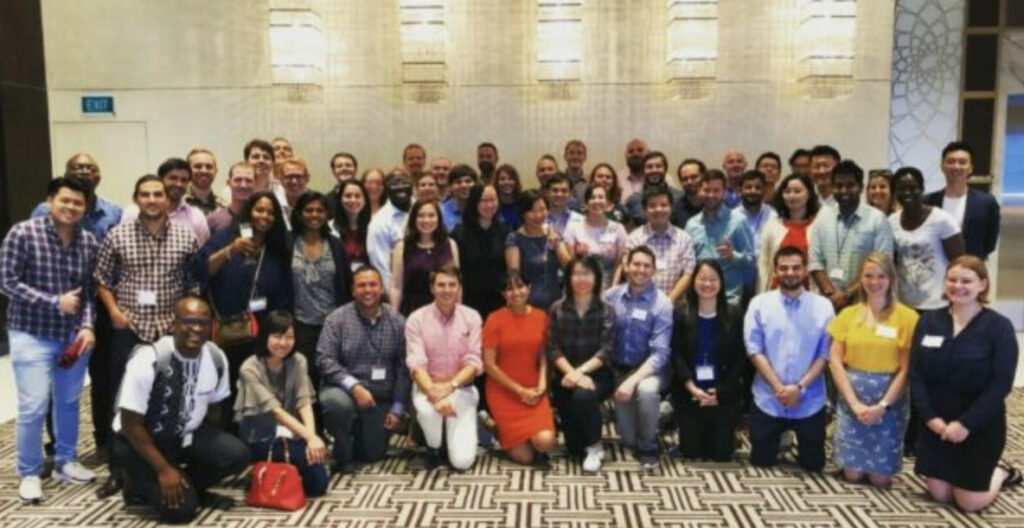
Executive MBA students in attendance at the Singapore weekend conference.
What this means for students: If you thought Quantic would be another anonymous MOOC program that you can pop in and out of at your leisure, think again. You’ll be given opportunities to experience the world and interact with leading business professionals. But, you are responsible for your own success and will be held accountable by your cohort in group projects.
Quantic Offers Two Affordable Paths to an MBA (And Ways to Further Decrease Cost to Students)
The MBA is aimed at early-career professionals who show an aptitude for business leadership. It is true rival to elite traditional MBAs and includes specialized coursework, group projects, proctored presentations, one-on-one faculty consultations, library and database resources, and virtual and in-person events. The program requires a bachelor’s degree, a minimum of two years of industry experience, and English language proficiency. This program values but does not require business experience.
The Executive MBA is suited for experienced professionals with more than seven years of industry experience who want to enhance their leadership skills. Students can specialize in management, entrepreneurship, or advanced business strategy. And like the MBA, offers opportunities to connect with peers via group projects, events, meet-ups and more. Additionally, Executive MBA students embark upon the Capstone project – a year-long project where they’ll build a business plan from scratch, culminating with a pitch to Quantic faculty. A few students have even launched their Capstones after graduation.
Both programs awards merit and need-based scholarships on a case-by-case basis and Quantic works with students’ employers to provide tuition reimbursement to further help cover the cost.
What this means for students: Starting a new life or building a new career does not have to come with a mountain of new debt. If you are willing to work hard, stay focused, and take advantage of the programs available to you, a debt-free, top-tier MBA is within your reach.
The Big Takeaway
If you’re among the tens of thousands of prospective MBA or Executive MBA students out there weighing your options and asking yourself if an online MBA is worth it, don’t worry, we get it. It’s a big decision and one that shouldn’t be taken lightly.
If you can afford to take two years off from work, add up to $200k (or more) to your debt load, and relocate to the city in which a top-notch residential program is located, you should do it, you won’t be alone. Thousands of other people make that same decision every year.
But, if you’re not willing to take on that kind of shakeup in your life and still want a top-tier MBA, keep a few things in mind. Quantic’s online MBA program is changing the landscape of higher education. Its curriculum is created by leading academic and business professionals and its teaching methods are rooted in a pedagogy that is proven to be more effective across cultures and throughout history.
Earning a degree from the Quantic School of Business and Technology also makes financial sense. Its partnership with employers subsidizes the cost of tuition for students and has built its business model around ensuring students find high-profile opportunities.
Is an online MBA worth it? We think so. Set up an account to apply to one of our MBA programs and sample over 40 free courses.
From art teacher to Facebook partner, Ian stresses the importance of finding your “common thread”
Something that most (if not all) Quantic students have in common is the desire to learn. Students come from a wide variety of backgrounds, with interests and expertise in everything from biotechnology, investment banking, and engineering, to start-ups, non-profits, and more. Some of these students, often with an insatiable sense of curiosity, wish to earn a degree in business so that they can transition into a new field. Moving from one industry to another can be difficult, but it goes smoother with the right mindset and guidance. This is the lesson that Quantic Executive MBA student Ian Saville learned and mastered.
Ian has changed career courses multiple times. In high school, he wanted to become a priest, but was also interested in math and physics. So upon entering his freshman year in college, he was set to double major in physics and religion at The University of the South. But, ever in search of a challenge, Ian opted for a major that pushed him out of his comfort zone: art. He realized that math and physics had answers that were too defined. He was drawn to art because there aren’t right or wrong answers, and that openness left room for him to problem solve and figure things out on his own. Upon this realization, he switched majors and completed his B.A. in studio art, and then earned his M.A. in Art Education from Columbia University.
“I think a lot of art making is about problem solving, coming up with unique expressions and novel ideas to address issues,” said Ian. “It’s challenging, and I like challenges.”
Problem solving is a big deal for Ian. It is something that has guided his career, influencing the various jobs he’s pursued. After college, Ian became a middle school art teacher in New York City because he felt it would help promote kids’ ability to problem solve and think critically. While he was passionate about educating kids, he realized that being a teacher wasn’t his true calling.
Ian then went on to become a career coach. He said that he wanted to help people reach that moment where they realize their potential and what they really want to be doing. He believes that if you can think about the underlying concept of why you are passionate about something, then you can find clarity in what you want to do. While he preached this concept to others, Ian realized that he needed to do this himself.
Ian needed to make a change — a big one. The thought of moving into a new industry can be an anxiety-inducing endeavor; there’s always the risk that what you think you want to do, won’t actually pan out in reality. It’s cause for some serious self-discovery and Ian heeded the call. He decided to meet with a mentor of his to find clarity.
Ian’s mentor helped him recognize that there was one thing connecting all his jobs and interests — a desire to help people grow. Ian originally wanted to be a priest to help people, he became an art teacher to help kids, and he was a career coach to help people improve their lives. This commonality was the beacon Ian needed to figure out his next step.
“I think there’s something about career transitions and pivots where it feels really daunting, but once you understand what that common thread of your work is, it actually makes it a lot easier,” said Ian. “But you really have to do the work and reflect on it to get there.”
This realization may sound simple, but it is not easy to come to. It takes a great deal of patience and focus to truly take an objective look at yourself and figure out your strengths, weaknesses, and passions. Ian did not simply snap his fingers and figure it out.
“It took a lot of screwups,” said Ian. “I had a lot of really bad interviews in that process. It’s not like an overnight ‘aha.’”
Even though Ian had figured out what he wanted to do, he struggled to convey his industry-hopping in a way that was attractive to employers. Ian realized that he had been going about it all wrong, and that he was trying to hide and downplay his teaching experience instead of using it as a strength. He figured out that the main idea of teaching is “taking abstract concepts and turning them concrete.” By reframing his experience in this light, he discovered that his work had quite a few parallels to the tech industry.
It was in this reframing that Ian was able to land a job at Facebook, where he started as a Knowledge Manager before his current position as a Learning and Development Partner. Even at Facebook, Ian continues this idea of improving the way people figure out what’s important, out of an abundance of unnecessary junk, and builds knowledge pipelines to streamline the essential information.
“When we think about learning and development, there’s the need for learning and there’s the solution,” said Ian. “If we could reduce the amount of time between the need and the solution, then we are doing the right work.”
If you’ve been following this blog, you might sense a theme in the people we’ve profiled for Student Spotlights — they are all natural leaders. Ian is no different. In his career advising, he worked with executive-level clientele and learned a great deal about leadership. He believes that the key to being a good leader is consistency; consistent in how they delegate, ask questions, and create inclusive environments where everyone’s voice can be heard. Ian says that leaders need to think about the people they are leading and put themselves in their shoes.
“Be really empathetic to the people you are trying to empower or influence,” said Ian. “What do they want? What’s in it for them? Why should they care about your perspective?”
Ian also believes that good leaders need to be conscious of what they do and don’t know. It is important to reflect on themselves and think about where they have weaknesses and who under them has strengths in those areas.
“Great leaders have the awareness of knowing what they don’t know and can bring in others quickly to fill the gaps,” said Ian. “A bad leader is someone who holds all of the pieces to themselves and feel as though they need to be in control all of the time.”
Outside of advising others and his work at Facebook, Ian stays occupied by looking for other problems that need solving — in one instance, finding a better way for kids to learn Chinese. So, he and his wife created a children’s music book that teaches Chinese. The idea for the book came from Ian’s wife, Peipei, who was born in Shanghai. She wanted their son to learn the language but they soon realized that it was difficult to find books that teach young children Chinese. Peipei and Ian accepted the challenge and recently published the book, Bao Bao Learns Chinese.
During this process, Ian’s knack (or perhaps, penchant) for problem solving came into play when he and his wife had to figure out a business plan, despite neither of them running a business before. While Peipei was the one who actually created the book, Ian supported her with the business aspects. Even though Ian was a novice in this arena, the business parts of launching this venture went smoothly, thanks to the knowledge he gained in Quantic’s Executive MBA program. Ian said that Quantic helped with the awareness of business principles and decision making needed for the success of the book. Ian and Peipei, who works at Facebook as well, also used their combined knowledge of digital marketing to help launch the book.
Ian leveraging what he learned in Quantic to publish a book is something that reflects Quantic students as a whole — they are driven, self-motivated people who aren’t afraid to tackle new challenges. These students actively seek new opportunities, such as continued learning and switching industries, in their quest to reach their true potential. While transitioning to a new industry may seem scary and difficult, Ian’s talent for navigating complexities and the discovery of his “common thread” allowed him to find his dream job. It’s a story we can all learn from and ask ourselves as we broach any major career change — what’s my common thread?
The following post is by Lindsey Allard (MBA 2016), Co-founder of PlaybookUX, a video-based user feedback solution for B2B companies.
It was 2015, and I had recently graduated from Dartmouth College with a liberal arts degree. I was looking for a way to gain general business knowledge while working as a product manager, and I came across the Quantic School of Business and Technology MBA. During my time in the program, I loved the courses because I was able to learn useful concepts in a short, quiz-like format that fit with my full-time work schedule. I didn’t have to stare at endless textbook passages. Everything was on my smartphone, and I could constantly test myself to ensure the content was committed to memory.
After my Quantic graduation in 2016, I worked as a product manager at a new company. I was leading a team of developers building SaaS products and mobile apps. Product managers are like “mini CEOs”. You need to know a little about a lot of things, and Quantic helped expand my areas of expertise during this point in my career.
After a few years of working at different start-ups, I decided to take the leap and co-found my user research company PlaybookUX with another Quantic alum, Kristen. User research is the process of getting feedback on things like product usability, pricing model, marketing copy, and concepts. By getting direct feedback from your target demographic, you are able to make better product and business decisions. However, as I know from my time as a product manager, the process of conducting user research has big challenges, like being extremely time-consuming and requiring a lot of manual work. And I didn’t see solutions out there that successfully addressed all the problems.
When developing PlaybookUX we sought to solve three main pain points:
It’s time-consuming
It’s expensive
Finding the right participants is challenging for B2B companies
Here’s how we solve these pain points with PlaybookUX:
Our product solicits video-based feedback, so that product owners can remotely conduct research, and then easily store and reference video records, ultimately saving them lots of time.
Again on the saving-time front, we do everything from recruiting the right participants, to incentivizing them, transcribing the sessions, and analyzing the videos with A.I. to extract actionable insights.
We have an affordable, pay-for-what-you-use pricing model so that customers don’t need to commit to large subscription fees up-front. This expands access to UX research to start-ups, founders, and small business owners. Previously, they were priced out.
Our testing participants are verified through LinkedIn so businesses know exactly who they’re speaking to.
During the process of launching my company, I leaned on Quantic lessons. Financial topics were always difficult to wrap my head around, and I was able to successfully price our product and build our business model with that in mind.
On top of the valuable knowledge gained from Quantic, I’ve been able to leverage the student network to get in touch with like-minded product managers. The network is a strong supplement to my undergraduate network.
At PlaybookUX our goal is to make user testing accessible to everyone. At the time of this post, we’ve been launching for a few months. It’s been a great few months—with hundreds of clients using our platform. We’ve had success with UX Researchers and Designers, but our goal is to make research easy for Product Managers. In the future, I plan to lean on the Quantic network for advice on growth hacking to take PlaybookUX to the next level.