Receiving an Executive Master of Business Administration (EMBA) degree can improve your career and prepare you for more significant roles and responsibilities. You can increase your EMBA’s relevance by customizing it to fit your professional aspirations, personal goals, and industry demands. Quantic offers a structured yet flexible executive online MBA program, allowing you to balance your education and professional responsibilities.
The Executive MBA Program
The Executive MBA Program at Quantic is designed specifically for mid-career entrepreneurs and professionals. It combines our award-winning MBA curriculum with added advanced courses and specializations, allowing you to customize your MBA. The program takes 15 months to complete, with our innovative mobile platform and collaborative group projects helping you achieve positive results and career outcomes.
How To Customize Your MBA To Fit Your Needs
Our Executive MBA program has several specialization options to provide you with a personalized experience. You may choose to specialize in areas such as business communications, entrepreneurship, and strategic leadership. Here are some ways you can customize your Executive MBA to fit your needs:
Define Your Career Goals
Defining your career goals and aspirations before beginning the EMBA program allows you to take full advantage of the program. Quantic graduates have various goals, including moving to a bigger role at their current company, getting hired at a different organization, or starting their own business. Each of these goals could benefit from one of our advanced specializations, like strategic leadership, corporate-level strategy, or U.S. business law. Understanding your career objectives helps students select the most relevant specializations and capstone project paths.
Select Your Specializations
One of the main advantages of getting an executive online MBA with Quantic is the flexibility to customize your curriculum to suit your needs and interests. Our Executive MBA curriculum includes the same eight concentrations and capstone options as our MBA program, but instead of a single specialization, it requires three. There are currently 12 specialization options available for our EMBA program. These specializations include blockchain, statistical analysis, entrepreneurial finance, and more. These advanced courses help you deepen your professional knowledge and acquire specialized skills that benefit your organization.
Personalize Your Networking Opportunities
Quantic prioritizes networking by integrating collaborative group projects and case studies into our curriculum. We also host multiple EMBA extended weekends each year in various international cities. These networking opportunities allow you to connect with your peers, Quantic alumni, and corporate employers. You can customize your networking approach based on your industry interests and target organizations. This helps you expand your professional contacts and build relationships with individuals who can support your career goals.
Benefits of Customizing Your Executive MBA
Customizing your EMBA allows you to focus on the areas that you are most interested in. It also enables you to enhance your expertise in key areas, making you a more valuable asset to your organization. Here are several benefits of choosing a customizable program:
Increased Relevance
One of the main benefits of customizing your EMBA is the ability to confirm that your degree is relevant to your specific goals. Our program allows you to choose the specializations that best suit your needs, whether you want to improve your strategic planning capabilities or your negotiation skills. You can choose courses based on your current role or the role you want to secure in the future. You can also select courses that will help you strengthen your weaker skills. These customizable options allow you to acquire the knowledge and skills needed to excel in your chosen industry or position without spending time on courses that may not be relevant.
Added Flexibility
Choosing our radically affordable and customizable executive online MBA program provides you with added flexibility and adaptability. Our mobile-first platform enables you to complete lessons and courses at an individualized pace, allowing you to earn your EMBA on your own time. Our active learning model confirms that you understand the course material as you learn, helping you get the most out of your education. This personalization allows you to tailor your learning experience to fit your lifestyle and professional schedule.
Improved Career Outcomes
EMBA graduates experience many benefits, including promotions and increased salaries. 52% of Quantic students reported getting a higher role at their company within six months of graduation. This same survey showed a median salary increase of 22% within the same time period. Quantic graduates may be more likely to get hired when interviewing for a new position. Many of our graduates have also gone on to start their own businesses. Whether you want to start a venture or obtain a senior role, an EMBA helps you develop the necessary skills.
Earn an Executive Online MBA With Quantic
Customizing your Executive MBA can help you maximize its relevance and impact on your career. Quantic’s executive online MBA combines our award-winning MBA curriculum with added specializations and advanced courses. These courses allow you to customize your degree based on your professional aspirations and goals. If you want to advance your knowledge and career, start the process today by applying to our EMBA program.
Pursuing an MBA (Master of Business Administration) allows you to advance your career and expand your professional horizons. Online MBA programs have increased the accessibility and flexibility of earning an advanced degree. At Quantic, we use interactive online learning curriculums to provide you with marketable skills and advance your career. Learning more about our process can help you understand how online education programs work and the benefits they can provide.
The Benefits of Online MBA Programs
Quantic’s online MBA programs provide a focused, rigorous curriculum with the added flexibility of remote learning. Our programs use an effective and engaging learning method to help students retain information and learn faster. This allows our students to learn the same information and develop skills while balancing studies with career and personal responsibilities. Our surveys show that Quantic students have a high likelihood of achieving their goals after graduation. 52% of graduates reported earning a promotion within six months of graduating, and the median salary of our graduates increased by 22% within this same timeframe. We also utilize a network-first approach, which allows our students to spark connections with other students and alumni through online and in-person networking events.
The Quantic Process
At Quantic, our goal is to provide students with a high-quality, top-tier education and Ivy League-caliber networking opportunities at a radically affordable tuition. Our process involves several steps, from the admission process, enrolling in the program, to networking and graduating. Here is how our online MBA program works:
Apply to the Program
We have a highly selective admissions process that values high-potential learners. To apply, you must have an undergraduate or bachelor’s degree, show proficiency in the English language, and have a minimum of two years of industry experience. We value prior business experience but accept students from a diverse set of industry backgrounds. 80% of our MBA students attended the top 30 schools, such as Oxford University, UC Berkeley, and Harvard University. Many also have experience at some of the most impactful and innovative companies and organizations, such as Google, Amazon, and Apple. To get started, you can submit an application online. You may be selected to complete an interview with our admissions team or you will hear back with our decision.
Complete the Curriculum
Quantic’s online MBA program is an accelerated 15-month program designed for early-career professionals. Our curriculum includes eight concentrations, a specialization in entrepreneurship or advanced corporate-level strategy, and a business plan capstone or strategy report capstone. Our platform uses our Active Learning method while also encouraging collaboration with classmates through group projects, discussions, and case studies. Active Learning regularly challenges students by requiring frequent interactions and tests to advance in the lesson. These tests are used as an opportunity to teach and build off of prior lessons.
Our Active Learning teaching method is feedback-based to promote fast and effective learning. A 2016 study by Stanford Academics found that Quantic students performed as well, if not better, than traditional MBA students from the top 10 business schools when tested on accounting and finance. Our platform also utilizes artificial intelligence to personalize learning for each student. Artificial intelligence can clarify course material, explain subjects on a deeper level, and help you stay on top of deadlines.
Network
We encourage networking by designating group assignments that let you interact with and learn from your cohort. We also hold MBA extended weekends in major international cities, allowing you to connect with thousands of students in person. Quantic has an extensive network of alumni and corporate employers that can expand your career options after graduation. These networking opportunities increase your connections and allow you to learn from some of the business field’s top leaders.
Graduate
After completing our comprehensive 15-month program, you will receive your MBA. Your MBA is awarded by Quantic, which is DEAC accredited and licensed by the Office of the State Superintendent of Education (OSSE) to grant qualified students with degrees of higher education. Graduating from our online MBA program can result in various favorable outcomes. Many of our students secure senior roles at their companies or use their new connections to join different ones. Some start their own businesses after receiving their MBA and developing these skills. A post-graduate survey from 2022 found that 94% of our alumni say that they met their career goals after graduation.
Apply for Quantic’s Online MBA Program Today
Online MBA programs offer a convenient and flexible pathway for individuals who want to further their education by receiving an MBA. This can lead to various advancement opportunities within your career, from securing promotions to increasing your salary. Quantic offers an online program with the option to specialize in entrepreneurship or advanced corporate-level strategy. Our programs teach marketable skills and allow you to connect with other students through our international network. Apply to the MBA program today to get started.
Getting your MBA can help you get hired, increase your salary, or earn a promotion. Traditional MBA programs do not always offer the flexibility that you need as a working professional with a demanding work life and personal engagements. Quantic offers an online MBA for working professionals, allowing you to customize your MBA experience to fit your busy schedule. You can expect the following benefits if enrolled in one of our online MBA programs:
App-based Programs
Quantic is recognized as the world’s first accredited mobile university. We earned this recognition after proving the speed, rigor, and efficacy of our app-based programs. Our mobile lessons allow you to access course materials, resources, and assignments from any device at any time. This makes it easier to customize your learning experience and integrate lessons into your busy schedule.
Our programs also utilize artificial intelligence and machine learning. This allows for a personalized learning curriculum designed to help you in multiple ways, including clarifying course materials and reminding you of deadlines. As you progress through the lessons, the artificial intelligence learns more about you and your learning needs, creating a more efficient and customized learning experience.
Efficient Learning
Quantic’s 15-month MBA and EMBA programs use a feedback-based, interactive learning method called “active learning.” This award-winning learning style was designed to help students learn more material in less time. Quantic students studying accounting and finance were found to perform just as well or better than MBA students from many of the top 10 business schools. They were also able to do this over five times as quickly.
Instead of relying on lecture videos or textbooks, our program uses interactive instruction and frequent interactions designed to challenge you and help you learn. Each lesson builds on top of prior lessons, and we use tests to help teach rather than to confirm comprehension. By requiring frequent interactions, our curriculum helps you learn and remember the course material. If you do not understand a concept, the program can provide clarification or additional learning materials to assist with comprehension.
While Quantic is an app-based graduate school, we are also network-focused. We combine our active learning method with a collaborative approach and network that rivals other top business schools. This allows you to take advantage of our unique learning method without sacrificing networking opportunities that can provide you with valuable contacts and accelerate your career in the long run.
Customizable Programs
One of the main advantages of pursuing an online MBA with Quantic is that our programs are customizable. This allows you to personalize your curriculum to fit your needs. Our MBA and Executive MBA programs both have eight required concentrations and one capstone project. The MBA requires one specialization, while the EMBA requires three. These specializations allow you to customize your degree to focus on the topics that are the most beneficial to you.
For the MBA program, you can choose to specialize in advanced corporate-level strategy or entrepreneurship. You have the same options for the EMBA, with some additional options, including advanced finance, managing software development, and strategic leadership. Choosing a specialization that aligns with your goals reduces the amount of time spent learning information that doesn’t benefit you. This makes it easier to fit learning and earning your MBA into your busy schedule.
Optional Workshops and Events
Quantic allows you to benefit from the flexibility of mobile learning without missing out on valuable networking opportunities. While completing the program, you will have the opportunity to connect with other students from around the world through online group projects and case studies. Our network also includes our exceptional alumni who are leaders at some of the world’s top companies. These networking opportunities allow you to learn from some of the brightest minds and expand your career options.
As a Quantic student, you will also have the option to attend in-person and virtual events. We hold multiple weekend-long global conferences a year in major international cities throughout the world. These conferences feature world-renowned speakers who are qualified to speak on the most pressing topics impacting business and technology today. These conferences, meet-ups, and events allow you to participate in professional development opportunities while completing your schooling when it is most convenient for your schedule.
Apply for Quantic’s Online MBA for Working Professionals
Choosing an online MBA program allows you to customize your experience to accommodate your professional life and busy schedule. Our programs utilize efficient and active learning systems that are connected to a powerful professional network to deliver high-quality learning experiences and career outcomes. The lessons are app-based, which allow you to access them from anywhere on any device. Our curriculum uses artificial intelligence and machine learning to personalize your learning journey and provide you with helpful tools. Apply for Quantic’s online MBA for working professionals to experience a new kind of school.
Improved career opportunities make the cost of getting an MBA online an investment in your future. Career coaches and academic advisors recommend that you share the cost of earning your MBA whenever possible. You may find some companies and organizations are willing to help you achieve this goal, as they benefit from the skills and training the best accredited online MBA programs teach their students. Quantic is focused on helping students pursue employer-funded financial support and scholarship opportunities to make their education more accessible.
Finding the Right Type of Financial Aid
Your current employer could be a willing partner in financing your online MBA. Companies offering tuition assistance to employees typically administer such benefits in one of two ways: tuition reimbursement or tuition assistance. Tuition reimbursement programs require students to pay their fees upfront and then seek reimbursement later upon completion of coursework. Companies offering tuition assistance make money available upfront to pay tuition. They may also allow students to defer tuition payments when upfront financing is not available. Such a benefit usually occurs as part of a partnership between companies and academic programs. At Quantic, we work with an extensive network of prominent companies that offer their employees these tuition benefits and encourage professional growth.
Federal grants and student loans are another effective way to help prospective students pay for graduate school. The Education Data Initiative shows that as of 2023, American students have utilized loan resources totaling $1.73 billion. Federal student loan programs often offer flexible repayment options once students have completed their graduate studies. Grants provide the advantage of not requiring repayment, but unlike student loans, they are typically only administered through state agencies or private organizations. These grants often serve as an entry point to a future career with the granting organization. Quantic, however, is priced as such that even without employer support, students do not go into debt to earn a top-tier degree.
Types of Academic Scholarships
The best accredited online MBA programs utilize several different types of scholarships. Each offers a certain level of prestige along with the funds to pay for school. Graduate school scholarships are often grouped into the following categories:
Merit-Based Scholarships
Students may associate scholarships with incentives or awards for achievement, which is the principle behind merit-based scholarships. You might earn one by demonstrating consistent success during your undergraduate studies. Maintaining a certain grade point average during your graduate program might also qualify you for a scholarship. Merit-based scholarships are often rewarded as a result of academic, civic, or professional achievements. Your company or community could recognize your leadership skills or volunteer efforts through a scholarship to help further your career pursuits.
Need-Based Scholarships
Scholarships aren’t always awarded due to academic merit; they can also be given out on the basis of financial need. If you lack the financial resources to pay for graduate school, some organizations offer scholarships to help cover the cost. These scholarships recognize your ability to better your employment situation without imposing the pressure of having to repay the cost of your tuition. They may require you to provide tax records to show whether your financial situation meets their qualifying criteria.
Community Impact Scholarships
Diversity, equity, and inclusion programs extend scholarships to members of underrepresented or underserved communities. The goal of offering financial assistance in these scenarios is to encourage recipients to use their education to make a positive impact on their communities. Scholarships offered to international studentscould also fall into this category. The Education Data Initiative lists several examples of organizationsthat provide such assistance, such as the United Negro College Fund, the Society of Women Engineers, and the Center for Women in Technology.
Recruitment Scholarships
Businesses and government agencies use scholarships as recruitment tools. Conditions often accompany these types of scholarships, such as recipients being required to work for the granting agencies after completing their MBA programs. Recruitment scholarships might also steer students in the direction of a particular area of study. Industries like healthcare, finance, and technology, or companies where business skills support a primary service, encourage scholarship recipients to pursue coordinating specializations.
Specialty Scholarships
A broad range of specialty scholarships are available to prospective online MBA students. Branches of the military often offer scholarships to members as a reward for their service. Civic organizations may choose to award a scholarship to someone who best embodies their values or in honor of an individual affiliated with the group. Alumni associations looking to grow their membership or increase their prestige could award graduate school scholarships in order to meet these goals.
Afford the Best Accredited Online MBA Programs
Earning an online MBA becomes even more accessible when the degree comes at a radically affordable price. At Quantic, our innovative tuition model and various tuition assistance options, like scholarships and employer funding, ensure that students receive an exceptional education at a fraction of the cost of other elite schools. This helps secure our position among the best accredited online MBA programs. For more information about the resources available to you as a student at Quantic, contact our admissions team today.
In our continuous effort to enhance the student learning experience, Quantic School of Business and Technology is thrilled to unveil our latest feature that takes personalized learning to the next level: “Explain This Screen.” This innovative addition is built upon the foundation of AI Advisor, which has already made significant strides in supporting students throughout their educational journey.
Since the launch of AI Advisor last year, positive feedback and high usage rates have shown us the immense potential of integrating AI into our curriculum. Students have actively engaged with AI Advisor to clarify complex concepts and navigate their coursework. It’s been inspiring to see so many of our students leverage this tool to enrich their learning journey. And starting today, students can now use AI Advisor directly from within their lessons, getting the support they need when they need it.
What is “Explain This Screen”?
“Explain This Screen” is an AI-enabled feature designed to offer real-time, context-specific assistance within lesson screens. By clicking the “Explain This Screen” button, students can initiate an in-depth discussion about the current topic, receive guidance toward correct responses, ask questions about related concepts, explore hypothetical scenarios, and review coursework to enhance lesson understanding.
Enhanced Practice with “Review This Lesson”
As students complete their lessons, “Explain This Screen” transitions into “Review This Lesson,” enabling an interactive review session of the content they’ve just learned. This ensures that they retain what they’ve learned more effectively.
Availability
This feature is now available to all current Quantic and Valar students and alumni. However, it’s specifically designed for teaching lessons, meaning you won’t find it in exams or SMARTCASEs. Our goal is to support the student learning process without impacting assessment integrity.
Your Feedback Matters
The introduction of “Explain This Screen” signifies our commitment to leveraging technology for education, providing students with innovative tools to deepen their understanding and explore new study methods. As always, your feedback is invaluable to us. We encourage you to use the Feedback button to share your thoughts and suggestions on this new feature.
We hope “Explain This Screen” becomes an integral part of your learning toolkit, enhancing your Quantic journey by making it more interactive, supportive, and tailored to your needs.
As a business analyst (BA) prospect, you will face stiff competition from others who have all the same skills and qualifications. The only difference will be your ability to convince Human Resource (HR) managers why you are better.
On the opposite end of the interview desk, HR managers face their own struggles. They need to align potential employees with organizational goals and overall vision. Human capital holds the potential to make or break any business so making the right decision is crucial.
The decision to move an interviewee along the line depends on your ability to judge their skills based on a few minutes of conversation.
We have just the solution for both interviewees and interviewers. Take a look at our comprehensive list of business analyst interview questions and answers.
Understanding Business Analysis
In simple terms it’s a way of saying that someone is looking at how a company is doing and figuring out how to make it better. Business analysts do this by taking a close look at everything – from the products and services a company offers to their customers and even their competitors. They use special techniques like gap analysis and benchmarking to find ways to improve efficiency and help the company reach its goals. Here are some ways they do that…
Analyzing data
Analyzing data is crucial in making informed decisions, and strong analytical skills are essential for business analysts. They must be able to gather relevant information from various sources, process it into meaningful insights, and validate their ideas with additional research. Strong quantitative skills to interpret complex data accurately are a must.
Problem-solving
Problem solving requires customised solutions that go beyond the conventional, and business analysts must think strategically while considering short and long-term implications. Communication is vital when working as a business analyst. They need excellent written and verbal communication skills to present their ideas and recommendations effectively, understand different perspectives, and collaborate with colleagues from various departments.
Project management
Project management is crucial to ensure projects stay on track and progress efficiently towards completion. Skilled professionals must understand how to prioritise and delegate tasks among team members, and anticipate potential issues using risk assessment methods and strategies.
Business Analyst Interview Preparation
Before even setting foot in the interview room, you will need to make the cut with an exemplary BA CV. Analysts have very specific job descriptions and these need to be reflected.
You could spend hours sending out your CV, and never receive any response. What is the solution? Joining a career network is probably your best option. This will give you the opportunity to apply to exclusive positions.
Combined with professional qualifications, you can propel your career to the next level. This will save you precious time and give you access to the ideal employer.
For HR managers, sourcing these CVs is the 1st step in finding qualified candidates. The best, (and easiest) place is through an outstanding Talent Acquisition Network.
Talent acquisition has a more strategic approach compared to recruitment. So where do you find such talent, and how do you ensure they are of the caliber you require?
An interview does not begin when you walk through the door. Rather, you need to be as prepared as you would be for a test.
Here are a few tips to become adept at passing any interview:
Do your research:
Before walking into an interview, you must know who is interviewing you. You need to know the company you are looking to work for. This will let you tailor your answers to their specific requirements.
Know your future job:
Thorough knowledge of your future job is an easy way to highlight your specific capabilities in line with the job requirements.
Re-learn your skills:
Invest some time in refreshing your memory on the key skills involved in a BA position. Make sure you can do what you say in your CV.
Study interview questions:
A job interview is similar to a test in which you do not know the questions. Lucky for you, you have the chance to study as many interview questions as possible.
Prepare your own questions:
Interviewers usually ask you if you have any questions of your own at the end of the interview. Ask a few questions regarding the opening, the job duties, and what is expected of you. Ask questions about the future plans of the company and their vision for BAs in the organization. The aim is to leave a lasting impression before you leave the room.
Junior vs. Senior Level Business Analyst Interview Questions
As a BA, your level of education, as well as experience, determines how far up the ladder you can go. Most analysts require a basic business or tech educational background. Success in an interview will then depend on additional skills.
A great way to accelerate your career is to complete an MBA or EMBA degree and give yourself an extra leg up.
Junior analysts generally have less experience and may have recently graduated. One option to accelerate your career as a junior analyst is an MBA program. The traditional MBA program usually requires 2 years of full-time study. It equips you with the business skills to grow in your career.
But how about an MBA that takes only 10 months? You may think this would be a sub-standard program and you would be wrong. The Quantic MBA is a fast-paced, personalized program, taught online, giving you the advantage of earning while you work. With an MBA in your pocket, you will be better prepared to answer these junior analyst interview questions.
Junior Level Analyst Interview Questions
1. How do you propose to compensate for your lack of experience?
This question is key for junior analysts as it is an opportunity to show that you can use your education as a basis to learn new tasks. Explain what experience you do have. The point is to show that you are capable of assimilating new information.
2. How do you think you would fit this position as a junior analyst?
Your research into the company will come in handy when answering this question. Look at the company philosophy and working methods. Be ready to explain how you would adapt to perform in the new role.
3. How do you deal with giving difficult feedback, especially in a junior role?
This is a test of your communication skills. Show that you can be tactful and thoughtful when giving negative feedback. It shows you are capable of working in a team, or in a future managerial position.
4. Can you name two diagrams used by a business analyst?
You will need to remember what you have learned when answering these types of questions. Be sure to mention and elaborate on:
Case diagrams
Collaboration diagrams
5. What steps are required before converting an idea into a product?
Explain the different types such as SWOT, gap, market, and competitor analyses.
6. Can you name the initial steps in project development?
This is another question that will test your theoretical capabilities. If possible, give examples of these steps in action.
Initial steps include:
Market analysis
SWOT analysis
Personas
Competitor analysis
Identifying the strategic vision
7. What are the key phases of business development?
There are four key phases, namely: forming, storming, norming, and performing.
8. What are the exceptions?
These are unexpected errors that occur when you run an application.
9. Can you give an example of a time when you had to make a tough decision?
This question tests your decision-making skills and ability to think critically under pressure. Provide an example of a difficult decision you had to make and how you arrived at your final decision.
10. What data analysis tools are you familiar with?
As a junior analyst, you should be familiar with basic data analysis tools such as Excel, SQL, and Tableau. Be sure to discuss your experience with each tool and any specific projects you worked on using them.
11. How do you prioritize tasks when working on a project?
Time management is critical for junior analysts. Discuss your process for prioritizing tasks, such as using project management tools or creating a prioritization matrix based on impact and effort.
12. What are some current industry trends in data analysis?
Research current trends in the data analysis industry, such as artificial intelligence, machine learning, and big data. Be prepared to discuss how these trends may impact the company you are interviewing with.
Senior Level Analyst Interview Questions
Senior analysts generally have more experience and a higher level of education. If you are looking to move up from junior to senior analyst, an EMBA may be the best move for your career.
You probably have an impressive resume with relevant experience. Adding an EMBA allows you to move into a more senior role.
Here are some questions to expect during your interview:
13. Can you explain the key roles and responsibilities of a business analyst?
You may not be able to list all the ‘textbook’ capabilities, so tailor these to your experience. Some may include:
Creating detailed analyses
Defining business requirements
Communicating with stakeholders
Planning and monitoring projects
Managing teams
14. What is a flow chart and how do you use it?
A flowchart shows the flow of systems using diagrams and signs. Mention how you have used one to make systems understandable for stakeholders.
15. What tools do you typically use as a business analyst?
Refer to common tools such as Rational tools, Microsoft Office, and ERP systems. Demonstrate working knowledge of how you have used them in the past.
16. What is project management in BA and how have you used it in your experience?
Define project management as the process used to attain desired goals as a BA. Explain how you have used it to identify glitches and the goals you have achieved. These could be solutions such as better functionality, lower costs, etc.
17. Tell me about a suggestion you have made that has benefited an organization you’ve worked for?
Take this as an opportunity to show what you are capable of. Prepare an example that was accepted and had a positive impact. Try to relate it to the position you are applying for.
18. What measures do you take to increase your team’s productivity?
As a senior analyst, you will be expected to be a proficient leader. This question gives you the chance to show that you are able to motivate a team. Answer with a ‘team-mindset’ in mind. Explain how you would use managerial skills to help team members achieve organizational goals. Include practical examples such as mentoring or having an ‘open-door’ policy.
19. How do you ensure that your team is meeting project deadlines and delivering high-quality work?
As a senior analyst, you will be responsible for managing a team and ensuring that project deadlines are met while maintaining high-quality work. Describe your approach to managing teams, including how you motivate team members, monitor progress, and provide feedback to improve performance.
20. Can you provide an example of a difficult project you have worked on, and how you overcame any challenges?
Senior analysts often work on complex projects that require creative problem-solving and critical thinking skills. Share an example of a challenging project you have worked on, including the obstacles you faced and how you overcame them.
“Tell Me About Yourself” Business Analyst Questions
These are usually open-ended questions that give you the opportunity to explain yourself and your passion for the job. Some of the personal questions include:
21. Why do you want to work as a business analyst?
You can explain the story of how you started your journey into business analytics. Give details as to why you are interested in pursuing a career in the field. Tell the interviewer what inspires you to do your day-to-day job.
22. What do you hope to achieve as an analyst?
Employers will ask this to determine if the job fits into your career aspirations. Explain your future goals in line with the position you are applying for. You can touch on ambitions such as attaining a leadership position.
23. What would you say are your strengths as a BA?
Personalize your answer to this question. Be sure to show you understand the skills necessary to succeed in the job role. Discuss both soft and hard skills. Prepare three strengths using the below formula:
Awards: Name prizes you have won.
Accolades: Mention special honors you have achieved due to your strengths.
Anecdotes: Tell a story that demonstrates how you used your strengths.
Acknowledgments: Name special recognitions you have received.
24. What would you say are your weaknesses as an analyst?
Do not try to downplay this question. Answering honestly and taking responsibility shows you are aware of the areas you should work on.
Technical Business Analyst Interview Questions
A technical business analyst focuses on using software and hardware to provide analysis that can be used to improve business systems. With that in mind, interview questions will focus both on business and technical skills. Take a look at some questions that are specific to technical BAs:
25. Can you describe your SQL skills?
As a technical business analyst, SQL is key in performing any job function. The HR team will be looking for someone with practical skills such as data manipulation, navigation, and the ability to write queries. If the interviewer is part of a technical team, you can wow them with technical lingo. This will help them understand the scope of your skills.
26. Can you describe the types of SQL statements?
This is another technical question that tests your educational background. You will probably face this in an interview with a manager in the business analytics team. Do not be afraid to explain in-depth your knowledge of SQL. Expand on the types, namely:
SQL definition
SQL manipulation
SQL control
27. What is your experience with technical and functional documents?
All BA’s should be able to explain what solutions various systems provide. As a technical analyst, you will be required to discuss how the system will work. Tell the interviewer you would be able to create documents such as Stakeholder Analysis and Scope Statement.
28. How do you convey complex, technical information to non-technical stakeholders?
The way you answer will showcase your communication skills. Show that you can be relatable, able to create simple mockups, and answer questions in an understandable manner.
29. What are the components of UML as you understand them?
There is no set answer to this question as concepts can be derived from many sources. Be sure to mention components for UML:
User Acceptance Testing is the final part of any analyst’s project. Go through these 5 steps and explain how you executed each one.
31. What is PaaS?
PaaS is a cloud computing platform that allows developers to build apps over the Internet. The services are accessible by users via their web browsers.
32. What is SaaS?
Software as a Service is used a third-party to host applications and give access via the Internet.
33. What is IaaS?
This is a form of cloud computing that provides virtual computing resources through the Internet.
34. What is CaaS?
Communications as a Service is a cloud-based solution that is leased from a single vendor over the Internet.
IT Analyst Interview Questions
35. How would you describe the role of an IT analyst in an organization?
This question is aimed at gauging your understanding of the position. Mention the fact that an IT analyst is key in the daily functioning of the organization. They ensure the smooth running of infrastructure and applications.
36. What are your technical certifications?
Have a list ready of your relevant certifications. If you are looking to continue studying, be sure to include these as well.
37. How do you ensure quality in deliverables?
To answer this, refer back to the client requirements that you would have gathered prior to providing a solution. Making sure the client is satisfied is key to measuring the quality of deliverables.
38. After researching a business tool, you come across two possible solutions. One is cloud-based, the other, premises-based. Which one would you recommend and why?
Guide the interviewer through your thought process when deciding on the best option. There is no concrete answer so explore both options. Give examples of when each could apply.
39. Provide examples of how you used data analysis to support your decision-making process.
The interviewer is looking to see if you understand the role of data analysis in decision making. Explain its importance in identifying problems and estimating the impact of possible solutions.
40. Which data visualization tools do you have experience with?
Your answer will show your ability to communicate with non-technical team members and clients. Have experience with at least one visualization technique.
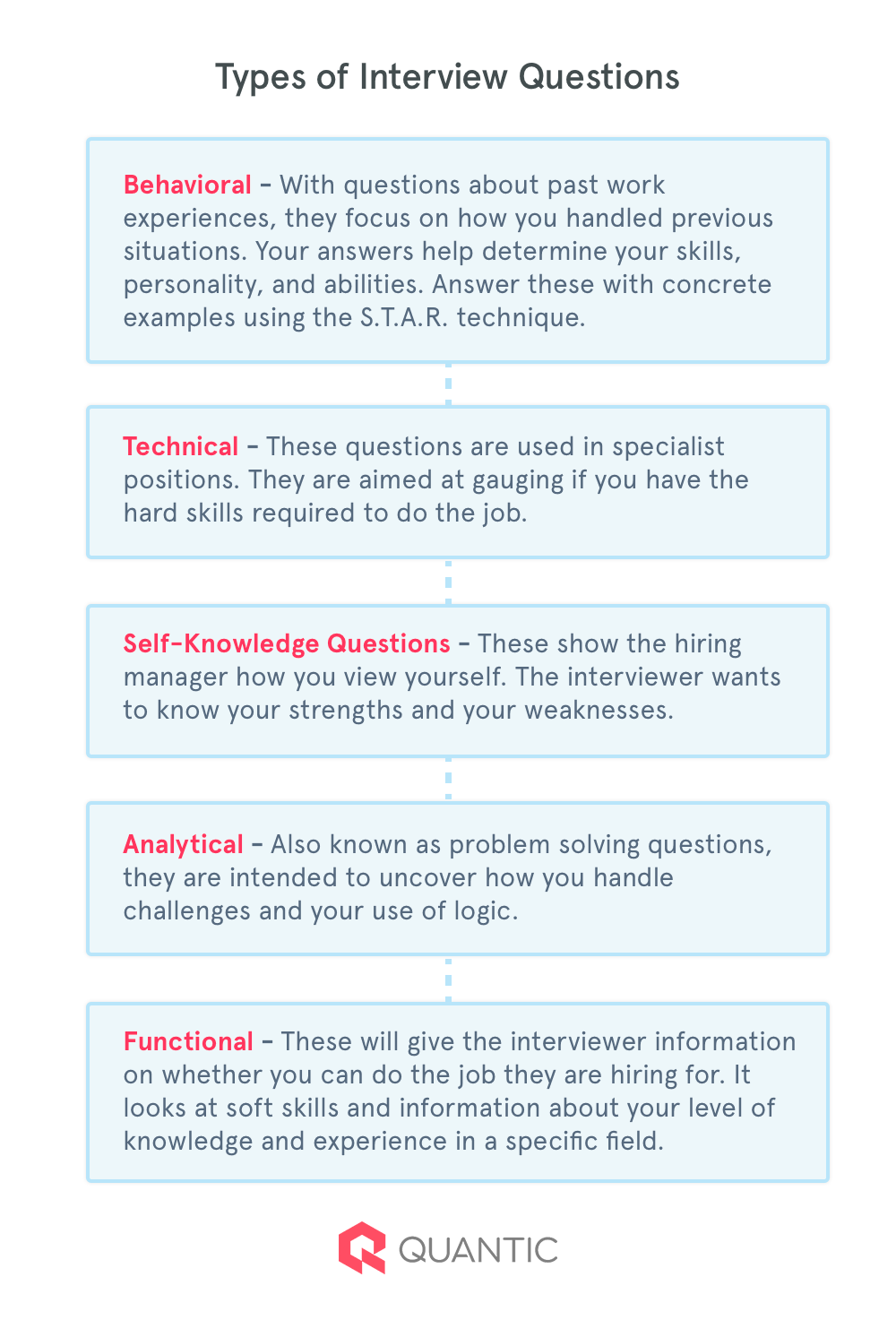
Behavioral Business Analyst Interview Questions and Answers
Behavioral interview questions work on the premise that past behavior is a good indicator of future behavior.
To answer these types of questions, use the S.T.A.R. technique to structure your response.
Plan ahead for such questions with ready examples and remember to keep the tone positive.
Analysts may face the below behavioral interview questions:
41. How do you handle difficult stakeholders?
How you deal with difficult stakeholders will show how successful you are in completing projects. Show that you can be objective, control your emotions as well as reach an amicable resolution.
42. Can you tell me of a mistake you made? How did you handle it?
The key to this answer is honesty. No one can do their job perfectly so do not try to cover up your errors. The interviewer wants to see that you took responsibility and corrected the error.
43. Have you ever had to pitch an idea to a senior employee? How did you handle it?
The interviewer is looking at your communication skills as well as independent thinking. Outline the steps you took to prepare and the results of your pitch. If you have never had such an opportunity, explain how you would handle a pitch if given the chance.
44. Have you experienced conflict with a peer at work? How did you deal with it?
Using the S.T.A.R method, explain how the conflict arose and how you resolved it. Emphasize on communication skills and your conflict resolution strategy. Demonstrate the ability to understand other people and reach an agreeable solution.
45. Tell me of a time when you had to deal with a lot of stress or work under pressure.
This will reflect your ability to deal with pressure in the future. Provide tactics you use, such as adequate preparation, relaxation techniques, and your change of mindset when under pressure.
46. What is the biggest goal you have achieved as an analyst? How did you achieve it?
Prepare by having your proudest goal in mind. The key is to focus on the steps you took to achieve that goal.
47. Tell me of when you had to learn a new skill. How did you master it and how has it helped you in your career?
Using the S.T.A.R method, describe the type of training you underwent in relation to BA and the quantitative results. You want to show that you are open to learning and are capable of putting theory into action.
48. Tell me of a time when you did not achieve a goal.
Respond by showing that you are capable of handling failure. The interviewer wants to see that you learned from the experience, and can do things differently if faced with a similar situation.
Functional Analyst Interview Questions
Functional questions will focus on what an individual can do. They allow the hiring manager to evaluate your skills, education, and have a glimpse at your desired career path.
Some questions include:
49. What is your experience as a business analyst?
There is almost a 100% chance you will have to answer this question. Be prepared to break down your experience, and summarise it all concisely.
50. Why should we hire you?
By understanding the job description, you can link your specific skills and experience with what the company wants. If your skills are not up to par, emphasize passion and commitment.
51. What are your current job responsibilities?
This is to see if your duties match the job requirements and those on your CV. Expand on the points in your resume and give a clear picture of what you currently do.
52. What is your educational background?
This is one of the simpler questions. Give relevant information on your education and how it could be applied to your career as a BA.
53. What does your typical day look like?
There is no ‘typical day’. This is aimed to see how you plan and how efficiently you organize your time.
54. What is most satisfying about your job?
Your answer will reveal what you believe in as an employee. Speak of an element of the job that applies to the job you are interviewing for.
55. What is the most challenging part of your job?
Breakdown your job and decide which challenges you face, but focus on the ones that can be solved. Choose a skill area that won’t affect your core tasks but can be improved.
56. Where do you see yourself in 2-5 years time?
HR will want to know if you plan on being with them in the long-run. Even if you do not have a concrete plan, show a sense of ambition and a desire to grow.
Analytical Interview Questions
Analytical questions are aimed at assessing your critical thinking. It is a chance to showcase your problem-solving skills and use of data to analyze processes in the organization.
57. How does analytical reporting provide value? Does it have any shortcomings?
Prove you understand the importance of analytical reporting. Do not, however, make it the ‘end -all’ of all decisions. Be sure to include the fact that other factors may not be well represented in data, yet they will influence the decision.
58. In your professional opinion, what does requirement analysis entail?
Requirement analysis needs you to analyze, document, validate, and manage software. Use this definition and the ‘SMART’ technique to show how you have used it in your previous experience.
59. Can you describe the requirements analysis process?
The process involves 4 steps, namely:
Eliciting requirements
Analyzing requirements
Modeling requirements
Reviewing requirements
60. What is the most important aspect of analysis reporting?
Explain the impact that analytical reporting has had in your previous roles. Show how you have used tools to provide value. This is a chance to show analytical and critical thinking skills.
61. Have you ever encountered conflicting data during analysis? How did you deal with it?
Show your problem-solving skills. Describe your process (e.g.: how you found the source of the problem and escalated the issue).
62. Can you describe the difference between design models and analysis models?
This theoretical question will test your working knowledge. Design involves raw data collection, planning, and creation. The analysis is the execution, fixing, and reporting of the model.
Marketing Performance Analyst Interview Questions
A marketing performance analyst provides solutions based on insights around marketing performance. They investigate marketing trends that can influence organizational tactics and strategies.
63. How would you build a predictive model? Can you describe it and the process you would go through?
You will need to demonstrate your ability to forecast future trends and probabilities from historical data. Use your past experiences to give an example of where you used a logical thought process to create a model.
64. What is the most surprising finding you have come across? How did it affect your work?
As a marketing analyst, you should be able to put preconceived notions aside when interpreting data. Showing your ability to be unbiased and open to new ideas could be the difference between you and the next candidate.
65. What type of CRM and analysis software have you worked with?
Be ready with an explanation of the different software programs you have used and how they have helped you as a BA.
66. What recommendations have you used that have increased sales?
Use work experience to show your ability to use data to add value. If you have no prior experience, give a scenario that you would implement in your future job.
Taking the Next Step
Start preparing to ace your next interview and land your perfect job with these questions. By ensuring you have the credentials required and a healthy amount of confidence, you will be well-equipped to level-up your career.
Quantic School of Business & Technology (“Quantic”), first accredited as a degree-granting institution in the United States in 2020, has received approval for full renewal of its accreditation. Quantic’s accrediting body, the Distance Education Accrediting Commission (DEAC), reviewed findings from a site visit with Quantic leadership in 2023 and voted to renew Quantic for 5 years, the maximum allowed renewal term. Valar Institute, a division of Quantic, was also renewed as part of this institutional review.
Quantic’s CEO, Bill Fisher, commented:
“We appreciate the rigor with which DEAC reviewed our online MBA and Executive MBA degrees. We take this renewal as another signal that our investments into program innovation and quality are paying off and further demonstrate our commitment to delivering unmatched value and outcomes for our exceptional students.”
Quantic plans to pursue additional approvals in 2024 for selective and affordable online master’s degrees in Business Analytics (MSBA) and Software Engineering (MSSE), as well as an online bachelor’s degree program aimed to launch by 2026. Fisher continued: “With industry-leading student satisfaction and graduation rates, Quantic is well-positioned to broaden access to elite-quality higher education in business, technology, and data-oriented fields.”
About Quantic & Valar
Co-founded by former Rosetta Stone CEO and EY Entrepreneur of the Year, Tom Adams, Quantic is an edtech powerhouse reimagining elite graduate education through selective, mobile-first, and radically affordable online degrees built for the modern workforce. In 2022, Quantic and its edtech parent company, Pedago, received $15 million in VC funding from Elephant Ventures, a firm started by a former Warby Parker co-founder. In 2024 Quantic was recognized as one of Inc.’s Fastest Growing Companies (Mid-Atlantic Region). Quantic’s momentum continues to climb with over 15,000 global students and alumni and a reputation as a premier online educator challenging top graduate schools.
Valar Institute is a fully accredited division of Quantic launched in 2022 and is dedicated to empowering managers to lead in a new world of work. Valar’s online EMBA and MBA programs use the same award-winning interactive learning methodology and peer-based cohorts as Quantic but are shorter in duration and emphasize leadership and management skills.
About DEAC
The Distance Education Accrediting Commission is a private, non-profit organization founded in 1926 that operates as a federally recognized accreditor of distance education institutions. DEAC’s goal is to ensure a high standard of educational quality in the distance education institutions it accredits and a quality education for the students who annually study at its accredited institutions.
See the full press release here: https://www.prnewswire.com/news-releases/quantic-is-accredited-institution-receives-full-term-accreditation-renewal-for-mba-and-executive-mba-degrees-unveils-plans-for-msba-and-msse-302071853.html
Dubai, a city synonymous with innovation, business prowess, and a rich cultural tapestry, recently played host to a Quantic leadership conference that left attendees inspired. With a keynote session on how to train your brain for success, case study discussions, cultural excursions, and more, students and alumni left equipped with new skills and strategies to take their leadership to the next level, and continue accelerating in their careers.
Quantic Dubai Leadership Conference Attendees
“Quantic’s way of learning has always been interactive and intuitive, and it is known to be a global community. Attending such events make us feel connected to like-minded individuals coming from different parts of the globe. It simply reminds us of the phrase “the world is so small” – Quantic EMBA learner, Manasa Vankayalapati, Lead Functional Consultant at Infosys
Day 1: Immersing in Emirati Culture to Foster Adaptability
The optional excursions on Day 1 weren’t just cultural expeditions; they were masterclasses in adaptability. Leaders who can seamlessly integrate into diverse environments are better equipped to navigate the complexities of today’s global business landscape. From historical tours through the Al Fahidi District to culinary adventures in the Old Souq, attendees didn’t just observe cultural nuances; they absorbed lessons in adaptability, a crucial trait for leaders steering through dynamic business terrains.
Students & alumni enjoying a delicious meal at the Sheikh Mohammed Bin Rashid al Maktoum Center for Cultural Understanding
Day 2: Training the Mind for Success and Continuous Learning
During the conference keynote session, “Business and Leadership: How to Train Your Brain for Success,” Dr. Laura Aymerich-Franch, Founder at Akazest and Evidence-Based Leadership Coach, shared a practical guide to unlocking cognitive potential. For leaders seeking to excel in their careers, understanding and optimizing cognitive processes is paramount.
“Goals have to be in your power to achieve. Don’t accept any belief that you don’t feel accountable for. Do things differently, not just more, and understand the right mechanisms that can really work for you.” – Dr. Laura Aymerich-Franch, Founder of Akazest and Keynote Speaker at the Quantic Leadership Conference in Dubai
The afternoon session, featuring site visits and workshops, echoed the need for leaders to stay engaged, adapt, and continuously learn. A successful leader is a perpetual student, gaining insights from diverse sources to inform strategic decisions.
Attendees networking in between sessions
Keynote session “How to Train Your Brain for Success” with Dr. Laura Aymerich-Franch, Founder at Akazest and Evidence-Based Leadership Coach
Day 3: Nurturing Leadership and Entrepreneurship for Sustainable Growth
Dr. Judy Thomas, PhD, MBA’s session on how Dubai’s policies nurture leadership and entrepreneurship wasn’t a mere examination of policies; it was a blueprint for sustainable growth. Leaders must not only steer their organizations but also contribute to the ecosystem they operate in.
Following this session, attendees participated in an engaging case study facilitated by Quantic’s Dr. Michael Sahloul. The case study promoted collaborative problem-solving, echoing the importance of collective intelligence in leadership. Skills in navigating complex policy environments and collaborating on real-world business challenges are critical for leaders aspiring to make a lasting impact.
“The Quantic conference was an amazing opportunity to meet people from around the world and build wonderful relationships that I hope to nurture moving forward.” – Quantic EMBA learner, James Silva-Pié, Director of Product Management at Millennium Europe Ltd Graduation Celebration and Farewell Reception: Networking and Relationship Building
As an online business school program, we’ll take any chance we can to celebrate academic milestones when the community gets together in-person! We took the opportunity to recognize recent Quantic graduates with a small ceremony with the beautiful Dubai Creek as a backdrop.
The Farewell Reception highlighted the importance of networking, relationships, and celebrating achievements. Effective leaders aren’t just technically adept; they excel in building relationships, cultivating networks, and fostering a sense of community—a testament to the holistic nature of leadership development.
Students and alumni, next year’s conference and events schedule is already filled with opportunities to learn, network, and grow personally and professionally. Login to your Quantic Network to register for the global conferences and find local events in your area.
“It’s always amazing to see how a group of perfect strangers can instantly turn into a bunch of friends when they have the chance to share knowledge in an exciting way.” – Quantic EMBA alumni, Roberto Ottolino, Creative Strategist, Author, and Lecturer
The role of women in leadership is more crucial than ever. Women leaders inspire change, break down barriers, and drive diversity and inclusion in every facet of society. We were thrilled to celebrate our Women Who Lead Week, honoring the incredible achievements and inspiring journeys of women leaders, in our Quantic community and beyond, who have shattered glass ceilings and blazed trails across diverse business industries.
Lily Satterthwaite, is one of these exceptional individuals with an impressive list of titles and roles, who is actively contributing to this movement. As a Regional Lead at Microsoft, Global Technical Women Committee Lead, Asians ERG Board Member, TEDxLondon Volunteer, STEM Mentor, and Quantic EMBA Learner, Lily has dedicated her career to supporting women in achieving their full potential. We had the privilege of sitting down with Lily to discuss her journey and her co-founding of the Quantic’s Women Club.
The launch of Quantic’s Women Club:
Lily has been fortunate to lead and be part of several women’s communities and institutes throughout her career, where women actively support and mentor each other to create more inclusive work environments. Her experiences in these communities inspired her to co-found Quantic’s Women Club. She wanted to create a committee led by female students but supported by male allies and allies in general. The vision was clear: to build a community that fosters connections, enhances the educational experience, provides value, and offers networking and professional development opportunities. But more importantly, Lily wanted to empower others to advocate for gender equity and support the success of female students in the business world. The aim was to attract women from different industries and backgrounds, ensuring inclusivity at every stage of life.
Building connections and fostering lifelong friendships – that’s what Quantic students and alumni are all about at our Barcelona 2023 conference.
Supporting Women in Leadership:
Communities like Quantic’s Women Club play a pivotal role in supporting women in leadership positions. Lily shared her insights on how networking and such communities can make a difference:
Valuable Support: Women leaders who come together in communities offer each other invaluable support. This support system not only boosts confidence but also helps women navigate the challenges they might face in their leadership journeys.
Networking Opportunities: Building a strong professional network is essential for career growth. These communities facilitate networking among women leaders, providing a platform to establish meaningful connections and exchange ideas.
Skill Development: Women in leadership can enhance their skills through workshops, seminars, and mentorship programs within these communities, making them even more effective leaders.
Advocacy: Such communities challenge traditional gender stereotypes by showcasing successful women leaders who inspire others to aspire to leadership positions. This advocacy is essential in creating future pipelines for women in leadership.
Students seize the opportunity to collaborate, as they delve into a captivating case study.
The Future of Women in Leadership:
Throughout the week, we asked many people in our Quantic community to finish this sentence, “When I think of the Future of Women in Leadership,” Lily had a powerful response:
“Women in leadership roles exert a profound and wide-reaching influence, touching upon societal, relational, and organizational facets. They serve as catalysts, inspiring change, dismantling barriers, and promoting diversity and inclusion, which is crucial going forward. Their presence fuels empowerment. They shatter stereotypes and foster fairness and innovation, especially in the male-dominated tech world. Women leaders not only enhance their own lives but also catalyze a beneficial effect extended to men, students, partners, and spouses who embrace and support women in leadership to create more inclusive and thriving communities.”
Lily Satterthwaite’s journey and her co-founding of Quantic’s Women Club are shining examples of how women can empower each other and drive change in the world of leadership. As we look to the future, it is clear that women in leadership roles will continue to shape a more inclusive, diverse, and innovative world. With leaders like Lily paving the way, the future of women in leadership is undoubtedly bright.
You can watch some of thoughtful conversations Women Who Lead Week conversations here:
Also, are you interested in joining the Quantic Women’s Group? Use this link to learn more!
It’s our mission to advance the state of the art in online instruction, and we see AI as an incredible enabler of improved outcomes and democratized access to high quality education. That’s why we’re excited to announce the beta launch of AI Advisor, an advanced chatbot powered by OpenAI, built to support our students and alumni on their lifelong learning journey.
Quantic has always believed in leveraging technology to move education forward. We’ve been a pioneer in the field of active learning and were the first to take a mobile-first approach to higher education. It’s our mission to advance the state of the art in online instruction, and we see AI as an incredible enabler of improved outcomes and democratized access to high quality education. That’s why we’re excited to announce the beta launch of AI Advisor, an advanced chatbot powered by OpenAI, built to support our students and alumni on their lifelong learning journey.
Access AI Advisor by clicking on the BETA robot icon in the dashboard.
AI Advisor serves as a personalized guide to every student at Quantic. It can act as a tutor, answering questions about curriculum and coursework, and even help students practice for exams. It can equally provide on-demand administrative support relating to requirements, policies, and the student schedule. And when the bot doesn’t have an answer, our team of faculty, academic advisors, administrators, and support staff are ready and waiting to help!
Our product and engineering teams have spent months designing, iterating, and testing the AI Advisor experience. It’s early days; we’re initially launching on desktop with mobile soon to follow. We plan to significantly extend the bot’s capabilities, and we are excited to pursue other ways of utilizing AI to enhance the student experience.
Read on to learn more about AI Advisor!
How can AI Advisor help?
Can’t remember where you learned a particular concept? Need a quick definition? AI Advisor will not only provide you with information, but it will also point you toward lessons or FAQ articles where you can learn more. You can also ask the bot to provide practice questions for a particular topic, explain a formula, check in on your progress toward graduation, or ask questions about what’s next in your curriculum.
What if AI Advisor makes a mistake?
Our team regularly monitors the performance of AI Advisor, annotating and categorizing bot output for finer-grained analysis of accuracy. We leverage techniques such as retrieval-augmented generation to ground the AI model on relevant sources of knowledge to reduce hallucinations and better ensure relevant answers to Quantic-specific queries. We’ve performed extensive internal and external testing, including formal evaluation by faculty and staff.
Still, mistakes happen! We have created tools to allow us to identify issues and improve the accuracy of AI Advisor in response to both user feedback and internal monitoring. We encourage our students to suggest new features, as well as use the thumbs up and down buttons to let us know how helpful they find AI Advisor’s answers.
How does AI fit into the vision for Quantic’s future?
In higher ed, much of the conversation about AI centers around cheating prevention or lesson plan generation. We, on the other hand, are excited to embrace this new technology as a way enrich the student experience. We founded Quantic with a vision of education that’s of the highest quality, precisely tailored to the needs of every individual, and delivered in an accessible, flexible format. With this launch, and as we continue to innovate in AI and other emerging technologies, we’re excited to be taking another step towards realizing this future.