The Future of Project Management and the 4 Skills You’ll Need

Management technology is massively disrupting project management.

In fact, Jon Broome, Chair of APM (Association for Project Management), suggested that advancements in technology will automate most administrative functions of project management. For instance, schedules and risk registers will be generated by artificial intelligence using hard data.

Meanwhile, Michael DePrisco, vice president of PMI (Project Management Institute), pointed out that the core focus of future project leaders will be understanding and leveraging technology to deliver more value.

As a result, enterprising professionals are wondering how to best prepare for the coming tidal wave of changes brought on by technological advancement.

Well, here are four skills project leaders will need regardless:

  • Data science
  • Conflict resolution
  • Entrepreneurship
  • Resource management

In the following sections, we’ll delve into what these skills entail, why they’re important, and how they fit into the future of project management.

What Is the Future of Project Management in Light of Advanced Technology

Project management has changed a lot in recent years due to emerging trends, such as remote teams, digitization, and automation.

Today’s companies rely heavily on tech solutions for planning, executing, and monitoring tasks. For instance:

  • Artificial intelligence and big data for effective risk forecasting
  • Digitization technologies for remote progress tracking
  • Automation software for faster execution

These solutions have enhanced companies’ management capabilities and influenced the future of project management. Research suggests that 80% of project management tasks will be automated by 2030 and future managers will require greater technical skills.

They will need to be familiar with cybersecurity, blockchains, machine learning, and robotics— which are set to play greater roles in management.

Later on, we’ll follow these developments to help you prepare for the future of project management jobs.

Is Project Management a Dying Profession?

As automation takes over tasks, such as data collection and reporting, many are worried about the future of the project management profession. 

Will automation, predicted to rise to 80% by 2030, eliminate the need for project managers?—after all, this does save an American interior design company $75,850 in annual wages.

No. Technology will continue transforming management while collaborating with project leaders.

As such, future managers will need to develop skills in areas where tech falls short, i.e., soft skills. This is because management technology depends largely on the input from skilled experts.

Management technology will handle the mundane, business-as-usual tasks but rely on the manager’s ability to:

  • Inspire the team
  • Communicate with stakeholders
  • Negotiate with partners
  • Build team confidence

Already, companies are placing greater value on managers with strong soft skills. According to a recent organizational survey, soft skills are the most needed skill for project managers (45% citation) followed by technical skills (39% citation).

Therefore, the future of the project management profession needs both technical and soft skills rather than a complete shift to AI and similar tools.

Is Agile the Future of Project Management?

Agile project management delivers 11 times more return on investment than waterfall approaches and is 5 times more effective at cost and quality control. As such, agile is the dominant management philosophy with influence well beyond its IT department origins.

Even so, research shows that only 35% of projects launched worldwide are successful. Given the high rates of failure, is agile really the future of project management?

The simple answer is, no. Despite its numerous benefits, agile is unsuitable for:

  • Large, stable projects with well-defined objectives
  • Projects where stakeholders are not available throughout a project’s life cycle for consultation

Instead, the future is adaptive project management which features hybrid approaches—a combination of agile and waterfall management methods.

Future of Project Management Jobs

The average salary of project managers varies according to industry.

The personal care services sector has the highest with $151,360 per year and $72.77 per hour. Meanwhile, residential building construction has the least with $84,810 and $40.78 per hour. 

The following table compares salary averages across more industries.

IndustryAnnual Average Salary
Personal care services$151,360
Oil and gas extraction$136,590
Architectural, engineering, and related services$106,240
Management, scientific, and technical consulting$104,410
Non-residential building consulting$102,460
Residential building construction$84,810

Source: Bureau of Labor and Statistics

These averages are set to rise as project management extends to sectors such as health and finance, especially in emerging economies like China and India. This extension will also create 25 million employment opportunities by 2030. 

This means that the global project economy needs 2.3 million managers every year just to keep up with projected demand.

Future Trends of Project Management

Think back to what project management looked like 10 years ago—fewer tools, smaller teams, and simpler projects. Since then, the project landscape has evolved with major trends, including:

  • Blockchain
  • Artificial intelligence
  • Sustainability
  • Remote teams

In the following section, we’ll look at why they’re important.

Trend 1 – Blockchain

More companies are taking up blockchain solutions for management, such as when investigating disputes. Blockchain’s ability to automatically update records makes it perfect for reconciling records and transactions.

One of blockchain’s most important contributions to project management will be its smart contracts—essentially self-executing contracts powered by computer code.

Smart contracts speed up management workflows by reducing the number of critical functions that fall under the project manager—such as checking on project milestones and assigning new ones.

In turn, the faster workflow ensures timely delivery of projects and enhances a company’s overall effectiveness.

Trend 2 – Artificial Intelligence

Artificial intelligence is quickly making its way into project management technology, handling anything from predictive analysis to risk management. Its effectiveness is why, by 2030, AI is projected to contribute:

  •  $42.7 B (7.7%) to Egypt’s economy
  •  $135.2 B (12.4%) to Saudi Arabia’s economy
  •  $96.3 B (13.6%) to the UAE economy

AI’s core capability is providing data insights for decision-making, which enhances the agility of any given project.

Think of a manager deciding on which features to include on a product; AI identifies relationships and trends in customer data, then makes recommendations on which product features are most likely to sell.

Such insights boost an organization’s competitiveness by preventing commitment to poorly- planned, risky projects.

Trend 3 – Sustainability

Today, project sustainability is more important than ever. Governments and societies worldwide demand greener approaches throughout a project’s life cycle.

From a business perspective, green initiatives are cost-saving strategies. For instance, energy is essential for project execution, and a shift to renewable sources limits expenditure. This frees up resources that can be channeled to other critical areas, such as innovation and research.

Meanwhile, sustainable practices enhance a company’s reputation and inspire loyalty with customers.

Trend 4 – Remote Teams

Alt: remote teams

With the emergence of communication technologies, remote teams have become the norm.

Businesses benefit from a more comprehensive and borderless talent pool that’s cheaply accessible via contracts. They also spend less on office space, travel, and other administration costs. 

So, It’s not surprising that 65% of workers believe that offices will go fully virtual over the next few years.

Generally, remote working arrangements allow companies to stretch their resources and maximize operational efficiency. As such, they are critical for building lean, competitive businesses.

Skills Future Project Managers Need 

A fundamental understanding of concepts such as data science, conflict resolution, and entrepreneurship is necessary to keep up with trends in modern project management.

For example, data science knowledge helps a manager incorporate AI into more aspects of the project life cycle.

Here’s a deeper look at what these skills entail and how they keep pace with future developments in project management.

Skill 1 – Data Science

The insights generated by big data are indispensable management tools, especially for major projects with long life cycles.

From a planning perspective, insights from past projects reveal inefficiencies that inform the current project; for example, the number of slack hours and their causes.

From an execution standpoint, data analyses track progress and detect deviations early; for instance, changes in material prices and exchange rates beyond projections.

As such, project managers need to understand concepts such as statistical inference and regression analysis, which are taught in Quantic’s MBA.

The program features eight courses on data and decisions that teach you how to test and draw accurate conclusions from data.

Skill 2 – Conflict Resolution

Today’s projects are highly complex with ever-changing deliverables. As such, conflicts are never too far away.

Left unresolved, these conflicts can disrupt your team’s effectiveness, which leads to delays and missed deliverables.

Therefore, managers must understand the various aspects of conflict resolution, such as:

  • Behavioral and organizational elements of a conducive work environment
  • Effective communication
  • Effective contingency planning

Quantic’s Executive MBA program teaches these skills with a seven-course module on leadership. The topics covered include organizational behavior and working in teams.

Skill 3 – Entrepreneurship

Project managers are essentially CEOs. On one hand, they’re handling project deliverables, and on the other, they’re negotiating with shareholders and setting objectives based on forecasts.

As such, it takes more than technical and administrative skills to be effective.

Project leaders also need entrepreneurship skills, such as strategic thinking and market perception. This is especially useful when adjusting deliverables, as is common with agile projects such as software development.

The Quantic MBA program equipped Lindsey Allard with the skills and knowledge to successfully launch and grow her own company. She leveraged technology to make user research more accessible and efficient, which can be useful for project managers looking to conduct user research for their projects. Lindsey’s experience demonstrates the importance of continuously learning and expanding one’s areas of expertise to be successful in the constantly evolving field of project management.

Quantic’s comprehensive MBA program teaches entrepreneurship skills with a course on customer validation. You’ll learn how to measure demand and develop an optimized sales strategy.

Skill 4 – Resource Management

As projects grew larger and more complex, budgets grew smaller with tighter timelines.

Today, project managers grapple with keeping the budget, delivering quality, and meeting deadlines with limited resources. Essentially, they’re tasked with building a lean organization.

This necessitates a delicate balance of resource allocation for maximum effectiveness, since over-allocation to one task limits the others. Therefore, managers must be familiar with resource management concepts such as equilibrium shifts and elasticity.

Apply to Quantic’s MBA program which features a course on microeconomics that will teach you more about managing market equilibrium points.


“Finding out about Quantic and deciding to apply is one of the best decisions I’ve ever made.” Raphael Sung, CEO, Lemmino.

Quantic Live: A Conversation with Director of Quantic & Valar Career Services, Lisa Thomson

Enjoy our conversation with Director of Career Services for Quantic and Valar Institute, Lisa Thomson, Ed.D..

Lisa discussed everything from Quantic’s career services resources, common misconceptions about networking, and how to enhance your presence on LinkedIn.

Lisa is a career coach and connector, specializing in helping people discover and realize their potential, regardless of industry, life stage, or background. Before launching career services at Quantic, she worked in admissions and career services at Duke University’s Fuqua School of Business, spending the last 5 years leading career services for the master of management studies and the weekend executive MBA programs. She holds a Doctorate in Education from North Carolina State University and is a Designing Your Life certified coach.

Quantic Live: A Conversation with Dr. Nan Zhang, Quantic Marketing SME

Do you want to learn more about the Quantic student experience? Enjoy our conversation with Quantic Marketing SME, Dr. Nan Zhang! 

Dr. Zhang has worked in multiple roles as researcher, consultant, and professor. Her research focus is the impact of consumer’s identity on social media communication. She received her PhD in marketing from Southern Illinois University.

Her publication can be seen in leading marketing journals such as Journal of Research in Interactive Marketing. She presented as keynote speaker at American Marketing Association and Society of Marketing Advances, and has been working on the editorial board of Journal of Consumer Research.

Dr. Zhang has worked extensively with business practitioners and serves as marketing strategic consultant and mentor to help startups and small and medium enterprises.

She is certified in project-based teaching by the Association of College and University Educators. She is also a certified analyst in marketing stack tools such as Google Analytics and Tableau.

Out of work, she is an enthusiastic VR gamer. Her favorite game is Room VR. She also enjoys water sports, especially kayaking and diving.

Quantic Live: A Conversation with Salesforce Director, Grant Glaser

Enjoy our conversation with  Quantic Alum, Salesforce Director and Sales Leader Excellence Coach, Grant Glaser!

With over a decade of experience in technology & software, Grant has worked in a variety of roles including, Business Development, Solution Engineering, Learning Design, Strategy, Sales Enablement, and Executive Coaching.

Currently, Grant works in leadership development as an executive coach helping new leaders on their journey toward greatness. Working 1:1 and in small group sessions he identifies strengths & growth areas to support onboarding, ramp & on-going development.

Grant holds a degree in Psychology & Communications from Western University in Ontario, Canada, a certificate in Organizational Leadership from The University of Toronto, and his Executive MBA from Quantic School of Business & Technology (class of September 2021).

When he’s not tinkering with tech or coaching clients, Grant is an avid fitness fan & outdoor junkie: running, biking, hiking, swimming – the works! A life-long learner, he loves to expand his mind with a good podcast, video, book or movie.

Introducing Quantic Live: A Conversation with Quantic Alumnus Berthine Crèvecoeur West

Here at Quantic, we are always looking for new ways to connect and celebrate our global network. That’s why we are thrilled to be launching our LinkedIn Live series where we will be featuring stories from students, alumni, and faculty!

We are delighted to kick off our first Live with Conflict Resolution/ DEI Strategist, Ceo of Westbridge Solutions, LLC and Quantic Alumna, Berthine Crèvecoeur West. She discussed everything from her career journey, insights to create a more inclusive work atmosphere, and what she loves about our Quantic community.

Global Mobile-based Learning Platform Raises $15 Million to Re-Shape Education With Programs Engineered For the Modern Workforce

Washington, DC — March 1, 2022 — Pedago, the mobile-first online education company focused on career-embedded education, announced today that it will receive $15M in funding from Elephant, which is backing disruptive software, internet and mobile companies.

The investment will be split with Pedago’s initial partner institution, Quantic School of Business and Technology, which received over 75,000 applications and nearly doubled bookings year over year, two years in a row as applications declined at some of the world’s most elite business schools. 98% of students say they’d recommend Quantic to a friend, and 94% of alumni report they’ve reached their career goals after graduation. 

“As the global economy faces unprecedented disruption, the need for strategic leaders has never been greater — but traditional business education leaves much to be desired for working adults. We’re reimagining online learning and the MBA in order to unlock potential for rising executives, technology leaders, and entrepreneurs who need a relevant business education, and fast,” said Bill Fisher, CEO of Quantic. “Elephant’s investment — paired with their deep expertise in mobile and internet — marks a significant opportunity to deliver on our mission to develop pedagogically innovative learning programs for the modern workplace.”

Pedago and Quantic are reimagining online education through mobile-first education programs built for the demands of a rapidly evolving world of work. Courses offered through Quantic are designed to foster the sort of deep learning — and retention of key concepts — that enable tomorrow’s leader to develop career changing, marketable skills. 

The investment from Elephant will accelerate the development of additional degrees and institutions, AI-based innovation, and experiences and career services designed to enhance student outcomes.

“The rise of the Smartphone has touched and changed all aspects of our lives — but education. Pedago and Quantic are really leading the way in leveraging the power of mobile computing to develop education programs that are accessible, relevant, and deeply engaging,” said Jeremiah Daly, co-founder of Elephant. “The demand for high-quality training in leadership, strategic thinking, and business administration has never felt more urgent. We’re excited to bring Quantic’s innovative curriculum and network, and Pedago’s learning platform to more students in the year ahead.” 

About Pedago

Founded in 2013, Pedago is revolutionizing how we connect learning to positive career outcomes. Pedago offers an array of services; from enabling partner institution Quantic School of Business and Technology, the mobile-first MBA and EMBA built for the demands of a rapidly evolving world of work, to Miya Miya, a platform that teaches STEM to refugees in Jordan. Its mission is to re-imagine education with more accessible, effective, and impactful systems that enable learners to reach their potential — faster.

Disruptive Corporate Learning and Development Trends // 2022

Corporate training programs are no longer optional, and here’s why.

  • By 2022, 54% of all workers will need re-skilling and up-skilling. This is according to the 2018 World Economic Forum report.
  • Opportunity for personal development is now a major reason for accepting a job offer. This is due to technological advancements and the fear of redundancy.

However, with this growing need for continuous learning, are companies getting the most out of training programs?

Not according to these findings by McKinsey:

  • Only 25% of businesses experience measurable performance increases.
  • Only 50% of companies keep track of employee feedback after training.
  • Only 30% of companies have a metric for measuring training effectiveness.

We’re going to delve into why corporate training is failing, and how you can get a better ROI from it. For instance, why your employees forget and how an interactive training program can help.

How Much Is Spent on Corporate Learning?

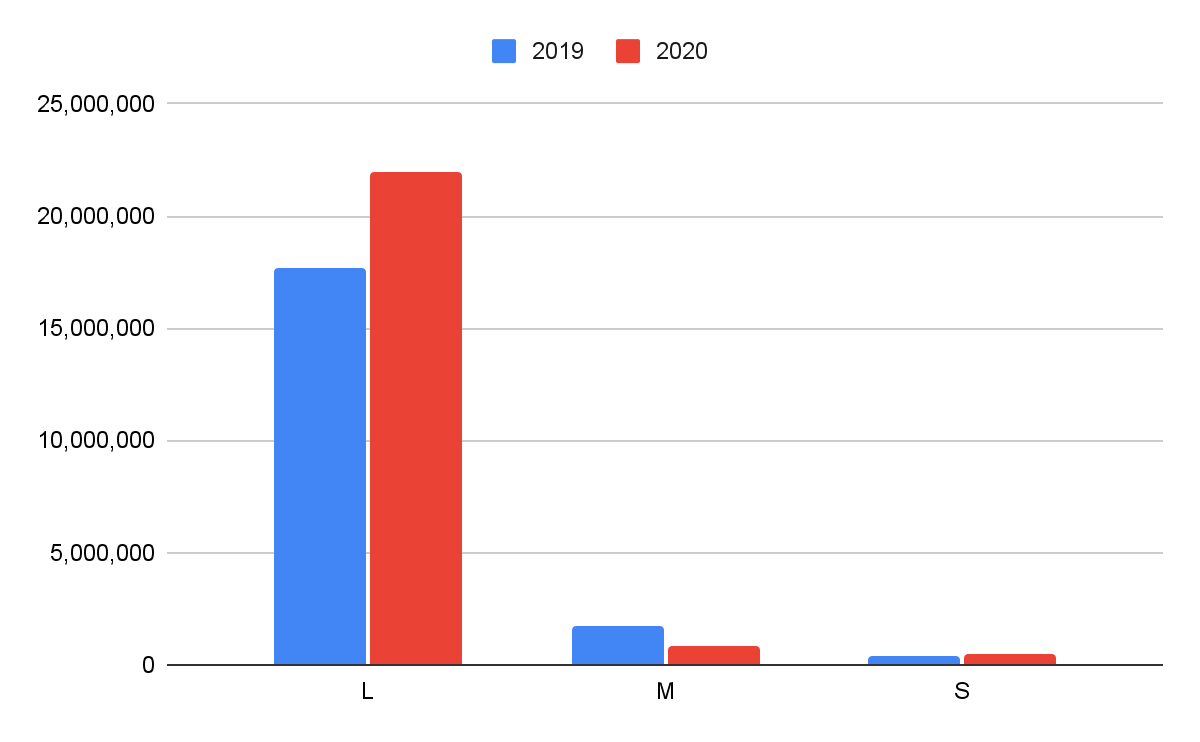
According to the 2020 Training Industry Report:

Average Annual ExpenditureNo. of Employees2019 2020 
Large companies>10,000$17.7M$20M
Mid-sized companies1,000–10,000$1,708,355$808,355
Small companies<1,000$367,490$506,819

Average Annual Expenditure 

This data represents US-based organizations and educational institutions with more than 100 employees. Small companies represent 40% of the respondents, mid-sized companies represent 34%, and large companies represent 26%.

  • Mid-sized companies spent less on learning and development in 2020. There was a 52% drop in expenditure from 2019.
  • Large companies spent more on training, with a 13% increase for 2020.
  • Small companies spent more on training, with a 37% increase for 2020.

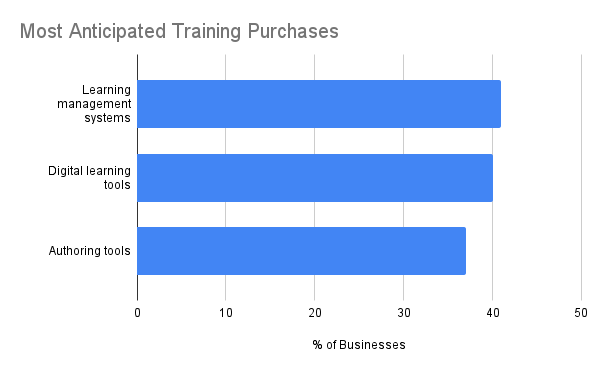
Under the current training budgets, the most anticipated training purchases are:

  • Digital learning tools (40%)
  • Learning management systems (41%)
  • Authoring tools (37%)

Currently, the focus of corporate learning and development is more on non-executives and non-managers. On average, executives get the least of a budget’s allocation with 9% compared to 44% for non-managers.

But there is an alternative—companies can gain a greater competitive advantage by budgeting more for upper management.

For instance, most executive MBA programs offer coaching and leadership training, networking opportunities, etc. Without such developments, managers fail to realize their full potential, which limits their performance.

Why Corporate Learning Is Failing

For all the talk and hype about organizational learning, changes due to L&D remain cosmetic and improvements short-lived. Regrettably, there are more failed programs than successful ones.

The following are statistics that highlight this: 

  • 42% of global L&D professionals note that there’s a lack of learning culture in corporations (LinkedIn Learning, 2020).
  • 36% of global trainers have a problem with employee engagement (LinkedIn Learning, 2020).
  • 70% of training programs fail to achieve their goals (McKinsey).

Here are reasons why corporate learning is failing.

Reason #1: The Forgetting Curve

Picture this: your company invested over $500,000 on employee development, only to have them forget 90% of their training within the first month. This is the forgetting curve, a gradual decline in memory retention.

  • After day 1 of training, you remember 100% of what you understood.
  • By the second day and without a review of the previous training, you will have lost 50%.
  • By day 30, memory retention is at 2%–3%.

The good news is that you can avoid this through:

  • Micro courses. This involves breaking down information into modules via a learning management system (LMS). This encourages learners to revise their training for better retention.
  • Engaging content. You need to consider aspects like user interface, graphics, and how compelling they are to users. For example, Quantic’s courses feature infographics, how-to videos, and checklists. This makes the content more interactive and memorable.
  • Follow-up tasks. This is a great way of ensuring learners revisit their training and practice. Online learning platforms like Quantic feature practice simulations based on real-life job situations. Solving these simulations boosts learning retention.

Reason #2: Standardized Training

Traditional training methods involve a collective delivery of content, similar training instructions, and similar methods of content delivery. But individual factors like work schedules and learning styles affect learning retention.

Instead, a more personalized approach to training would yield better business performance. The content would match individual learning needs, making the training relevant and more applicable.

Reason #3: Absence of a Learning Culture

Traditional leadership focuses too much on success and results. The perception of failure is that it’s something to be avoided or evidence of incompetence. There is no time or money for experimentation and learning.

In a nutshell, the opinion is that it’s better to buy than build talent. The result is that companies fail to develop new capabilities and eventually lose their competitive edge.

Even as companies now recognize the long-term gains of workplace learning, organizations may sometimes revert to old thinking habits.

In 2009, Toyota recalled over 9 million vehicles. Its leaders admitted that their goal to become the world’s largest carmaker compromised their commitment to learning. 

Corporate Learning and Development Trends 2021

Innovation in Corporate Learning and Development

The arrival of the pandemic took the L&D industry by storm. Overnight, practitioners experienced massive cancelations of in-person training programs, followed by record-breaking requests for remote training plans.

Many organizations had to rethink and adapt their L&D strategies, with a transition into fully online programs.

For the trainers, it was about figuring out the best use of different learning modalities which include:

  • Webinars
  • Video tutorials
  • Mobile learning (via tablets and smartphones )
  • eLearning (via laptops and desktop computers)

For companies, it was about:

  • Investing more in learning technology solutions, particularly learning management systems
  • Developing key performance indicators
  • Tracking business outcomes

How Mobile Learning Is More Effective for Corporate Training

Organizations are embracing mobile devices as powerful personal development tools. They are always beeping with alerts and reminders to keep users checking back, plus they’re accessible from almost anywhere.

With this level of engagement, it’s no surprise that corporate training is becoming more mobile. For businesses and training organizations, mobile devices enable on-the-job training, just-in-time learning, mentoring, and training feedback. 

Also, mobile learning irons out most of the problems associated with traditional training methods. For instance, scheduling issues, mismatching of individual learning styles, high costs, etc. 

Accordingly, the shift to mobile technologies has increased the effectiveness of corporate training. Here are a few examples: 

  • Better course completion rate — Given the flexibility of mobile learning, learners don’t need specific schedules or locations to learn. This ability to learn anywhere and at any time accommodates most schedules, which encourages course completion.
  • Better knowledge retention — Mobile devices provide constant access to information, and learners can access their training just when they need it (e.g. before performing a task). This encourages frequent training reviews and increases knowledge retention.
  • Higher engagement — Mobile-based courses are tailored to individual learning needs, from content creation to delivery (e.g. videos, podcasts, interactive games). This increases the training’s engagement level and encourages participation from learners.
  • Faster learning — For companies with different worker schedules and physical branches, organizing a training program that suits everyone can be difficult. They would need different sessions across various locations and time zones, which only slows down the training.

Fortunately, mobile learning eliminates this need since the training can be accessed from anywhere and at any time.

Corporate eLearning Solutions

The Early 1990s

In the early 1990s, most organizations used videotapes for employee training. It was a faster and more effective alternative to textbooks, albeit with some disadvantages.

First, videotapes were expensive and not that accessible. For employees to access training, they needed to have the right equipment, which was costly. Second, videotapes offered limited interactions to learners, which made it hard to track progress or gain insight.

Meanwhile, a new higher-capacity storage device was catching on. One that was easier to mass-produce and required less equipment: the CD-ROM.

Earlier versions of CD-ROMs had limited storage capacities, which wasn’t ideal for storing training videos. But with the development of digital video discs (DVDs) soon after, companies could store entire encyclopedias. This was the end of videotapes.

The Late 1990s

By the end of the 1990s, DVDs had taken over as the default eLearning solution for most organizations. They were cheaper to mail across offices, ubiquitous, and more accessible. All you needed to access training was a computer.

Despite these advancements, DVDs still couldn’t track learning progress, nor give insight. Companies needed a more objective way of measuring training impact. This ushered in one of the earliest innovations in eLearning, the learning management systems (LMS).

The Early 2000s

Learning management systems offered what previous solutions lacked—the ability to track employees’ performance. It was a way for instructors to create and deliver training content, then assess students’ performance.

At the same time, advancements in internet speeds and computing power gave rise to online publishing. It was now possible for instructors to place classes online, track student progress, and communicate with learners in real-time. 

For the L&D industry, this was a transition from computer-based training (CBT) to web-based training (WBT). Soon, there were more eLearning solutions like live-instructor-led training or e-classrooms, where instructors could address individual learning needs.

From the days of videotaped training, eLearning has come a long way. Each solution was built on the disadvantages of the former. For the L&D industry, however, there’s always room for improvement.

Corporate Learning and Development Programs

In an increasingly competitive and automated workplace, employees’ roles continue to evolve. 

According to a recent McKinsey study, up to 800 million jobs will be lost to automation by 2030. To remain employable, a large number of workers will need upskilling and reskilling. 

For most organizations, this evolution points to mass training across departments, branches, and geographical locations. Consequently, companies will require scalable L&D programs and the ability to track progress.

Looking on as a manager, how do you undertake a training program of this scale? How do you keep track of progress?

  • Start by assessing your needs — You need to identify the gaps in capabilities across the entire company. What skills are lacking for the company to attain its long and short-term goals?
  • Design the training journey — Most large-scale training programs are delivered through digital formats (e.g., eLearning). Digital learning offers flexibility—which is vital for accommodating company-wide schedules—and is continuous.

Learners can always access training whether on the job, in their free time, or before performing a specific task. This continuous interaction with training reinforces the skills learned and promotes knowledge retention.

  • Measure progress — Key Performance Indicators (KPIs) measure your progress. While the full picture comes at the end, it is still possible to draw conclusions during the training journey.

The first indicator is your capabilities. What new capabilities does the company have? 

The second indicator is behavior. What are the newly-trained workers doing differently?

The third indicator is business performance. How close are you to your short and long-term goals?

Your responses should give you an accurate measure of how effective a training program is. In some cases, a few tweaks are enough to turn things around. In other instances, your L&D may need overhauling.

The following are trends in the L&D industry.

Gamification: Taking the Boredom Out of Training

Gamification is one of the trends taking shape in the L&D industry. Organizations are introducing gaming elements to their learning environments. These elements include interactiveness, fun, and engagement.

The idea is that games create conducive conditions for developing new skills and promoting behavioral change. For example, interaction and engagement make learners more motivated, while fun makes the learning experience memorable. 

The result is better rates of course completion and better knowledge retention.

The Rise of Big Data

For all involved, the incorporation of big data technologies in L&D has advanced the scope of analytics. There’s more engagement data for trainers, greater impact assessments, and deeper insights for companies.

Consequently, big data is now the basis of most corporate decisions. From determining current and future training needs to developing learning strategies, businesses now rely on big data to inform these decisions.

The result is that corporate training is becoming more effective and businesses are realizing better ROI.

Microlearning: Bite-Sized Training

With today’s fast-paced and busy schedules, there is never enough time. Overtime is no longer so much about getting ahead as it is about keeping up. So how do you fit training into already-packed schedules? Microlearning.

Microlearning involves breaking down coursework into small learning units. As such, learners can go through these units at their own time and pace. For instance, while commuting to work or waiting for the next meeting to start, etc.

As a result, microlearning has led to better course completion rates, information retention, and is among the disruptive trends in L&D.

Corporate Learning and Development Strategy

For a large and diverse audience, you need a blend of strategies to keep the learners engaged. The following are suggestions on how to integrate various L&D trends into your strategy.

  • Embrace agile learning — This method uses incremental steps to facilitate faster learning. As such, the learning journey is broken down into small learning units—much like microlearning.
  • Adopt social learning strategies — This is a great way of offsetting the forgetting curve. Social learning makes the learning journey more interesting and engaging. This could be through gamification, peer learning, etc.
  • Measure progress — Leverage big data systems to assess your progress towards training objectives. This could be the capabilities you’ve developed, behavioral changes, or business performance.

Along with these suggestions, you will also need to execute your strategy at scale. This implies a team of trainers coordinating the company-wide training. The problem is this can take time and money, but there’s a cheaper and faster alternative.

The Quantic School of Business & Technology takes a collaborative approach to training. With its mobile-based curriculum and global professional network, Quantic specializes in large-scale training and efficacy. 

Quantic’s virtual learning program connects learners and encourages their collaboration through team projects. Whether in different states or time zones, employees work together on simulations and challenges, with trainers available for support.

How Modern Corporate Learning Drives Competitive Advantage

Better, faster, smarter. The hallmarks of a dominant company, courtesy of modern L&D.

Today’s corporate learning is such that companies can accurately tell why this month’s training was more effective. Companies can explain why employee output was greater last quarter, or why the cost of training per employee is lower this year.

On data and insight alone, the old ways just can’t keep up. But beyond data is the results. Here’s an example of a modern L&D program, through Quantic School of Business and Technology.

This makes the learning experience faster, more efficient, and more effective than traditional training techniques.

Your company is sure to gain competitive advantages in performance, sustainability, and enhanced capabilities. The program implements scenario-based training to solve business questions like, “How can we work more efficiently?” “What are our limiting factors of productivity?” “What skills do we need to develop?”  

Frequently Asked Questions

Do All Employees Need Training?

Yes. Without full-scale training, your company limits its ability to gain new capacities, retain top talent, and boost performance. This then limits your company’s competitive edge. 

What Makes for Good Corporate Training?

The training has to be specific to your company’s needs and objectives. This involves reviewing your employee’s needs as well as the company’s capabilities and goals. The training must also have a way of measuring effectiveness (e.g., key performance indicators).

10 Companies That Will Pay For Your MBA Degree In 2024

On average, your two-year MBA program can cost well over $50,000.

MBA ProgramCost
Wharton School$83,230
Harvard Business School$73,440
Yale$76,770
MIT Sloan$78,954

This is on tuition fees alone.

When you factor in other expenses like health insurance, rent, transportation, and indirect costs, you’re looking at over $100,000 for most top MBA programs. 

Consequently, without tuition assistance (federal or private), financing an MBA program can be difficult. The good news is, there are companies that offer tuition reimbursement.

We’re going to be identifying these companies, the details of their sponsorship programs, and how you can get your employer to pay for your MBA.

With that, here’s a list of companies that pay for MBA programs. Their life-changing programs have helped workers get out of student debt, secure promotions, and lead better lives. 

What’s even better is, getting into these programs might be easier than you think.

  • Deloitte
  • Wells Fargo
  • Intel
  • Chevron Corporation
  • Apple
  • Bank of America
  • Oceaneering International
  • Best Buy
  • Qualcomm
  • Boston Scientific

Companies That Pay for MBA Programs

From the financial services industry to the technology industry, more and more organizations are investing in education. This is to help attract and keep top talent. 

Some companies offer to pay for graduate courses, student debt and even provide benefits such as tuition reimbursement.

According to the International Foundation of Employee Benefit Plans, 9 in 10 US companies offer tuition assistance.

What’s more, schools offer online MBA programs to make it even easier for employers to pay for them. Online programs enable learners to balance business school with a full-time job, complete coursework faster, and lower overall education costs. 

The following is a deeper look at various tuition reimbursement programs. 

Company #1: Deloitte

Deloitte’s acceptance rate to the top 20 business schools is three times the national average.

Deloitte’s Graduate Student Assistance Program (GSAP) is designed to send its best employees to the best business schools. The expectation is that workers will return to Deloitte as senior consultants and receive reimbursement after two years.

Here are the details of the GSAP:

  • Full tuition reimbursement. MBA graduates are fully compensated after two years of employment at Deloitte.
  • Technology stipends. A technology allowance is given to departing students for computer-related purchases.
  • Application support. Deloitte hosts graduate school preparation events and learning sessions for its participants.
  • Direct interaction with MBA admissions directors. Deloitte organizes an annual graduate school symposium with admissions directors from approved MBA programs. 

 Who is Eligible?

  • Your application and acceptance to the GSAP must precede your application and enrollment to graduate school.
  • You must have consistently demonstrated strong consulting and leadership capabilities for a minimum of two years with Deloitte Consulting LLP.

Company #2: Wells Fargo

With more than 7,200 branch locations and offices in 31 countries, Wells Fargo needs higher-educated employees to keep operations running effectively. This is why they’re among the companies that pay for your career development.

As an employee, you can enjoy educational benefits like tuition reimbursement. You can even earn scholarship opportunities for your kids.

  • Tuition reimbursement, Wells Fargo employees receive tuition assistance of up to $5,000 annually.

Who is Eligible?

  • Your MBA degree must be a requirement for your current or potential position. It should be listed in the job description.
  • You must be a full or part-time employee.
  • Flexible employees are not eligible.

Company #3: Intel

Through the Altera Benefit Program, Intel provides reimbursements for MBA tuition expenses, registration fees, and the cost of required books.

MBA graduates can receive tuition assistance of up to $50,000 with no annual limits. This comes with a two-year commitment and may be treated as taxable income.

If you terminate employment within one year of receiving tuition reimbursement, you will be responsible for 100% repayment to Altera.

Who is Eligible?

  • You must receive managerial approval before undertaking an MBA program.
  • You must be a regular, full-time employee.
  • You must be working 30 hours a week.
  • You must attain a grade of B or better in your MBA.

Company #4: Chevron Corporation

Chevron offers tuition assistance through its Surplus Employee Severance Pay Program (SESPP). The program is designed to help employees prepare for other employment opportunities outside Chevron.

Your course doesn’t have to be related to your role at Chevron.

You can be reimbursed for:

  • Courses offered by US-based educational institutions.
  • Courses offered by vocational schools.
  • Coursework that is part of an online program or learning platform. 

The SESPP program offers a tuition reimbursement covering:

  • 75% of the tuition expense.
  • The learning platform subscription fees.
  • The cost of purchasing required books.
  • Coursework and training expenses of up to $5,000.

Who is Eligible?

  • Your course must start within 2 years after leaving Chevron.
  • Your course must not take longer to complete than 2.5 years after leaving Chevron.
  • You must submit your reimbursement forms within 2.5 years after leaving Chevron.

Company #5: Apple

Apple pays for your education, even when the course isn’t related to your job description.

What’s the catch? You must maintain an average grade of B-.

Apple’s tuition reimbursement program is available to full-time employees. The program is limited to $5,250/year and includes paying off student loans for workers who have finished college.

Additionally, Apple has a training facility—Apple University—designed to offer courses tailored to individual positions within Apple.

Company #6: Bank of America

Bank of America (BOA) provides you with up to $7,500 under its tuition reimbursement program. This only applies to job-related courses and certifications, while $5,250 of the reimbursement amount is tax-free.

BOA’s education benefit entails:

  • A Prepaid voucher. Following a successful application, BOA pays for eligible expenses upfront. You can also request to add eligible expenses that you did not include in your initial application.
  • Reimbursement. If your school doesn’t accept vouchers, you can pay for eligible expenses and have BOA refund you once the course is complete. 

Who is Eligible?

  • You must have a minimum of six months of continuous service before starting your course.
  • You must be on BOA’s payroll when applying for tuition reimbursement.
  • You must have attained a grade of B- or higher.
  • You must be meeting or exceeding your role’s performance requirements.

Company #7: Oceaneering International

Oceaneering International is one of the companies that pay for their employees’ education. However, your area of study must relate to your current or probable role in the company. Also, this policy only covers undergraduate and graduate courses (e.g., MBA programs).

Oceaneering will reimburse you for up to $8,000/year for graduate courses if you’re eligible. This covers 90% of eligible tuition expenses like course materials and registration fees.

Who is Eligible?

  • For MBA courses, you must provide your supervisor’s description of each course. This description must be from the institution’s catalog or website.
  • You must have documentation showing the cost of the course. This documentation must be from the institution’s catalog or website.
  • You must create an individual development plan (IDP) with your manager. This contains a listing of your master’s degree as part of your development.

Company #8: Best Buy

Best Buy has one of the most competitive tuition reimbursement programs in the retail industry. This is the Best Buy Tuition Assistance Program.

The program was formulated to help the company become a learning organization and is also available to employees on leave.

If eligible, employees receive reimbursements of up to $5,250/year for graduate courses (e.g., MBAs). This covers expenses associated with your course of study.

Who is Eligible?

  • You must be working 32 hours a week.
  • You must be a full-time employee and in good standing.
  • Your application for reimbursement must be submitted within 30 days of starting your course.
  • You must complete your graduate course with a B- or better.
  • Your graduate degree must be from an accredited institution.

Company #9: Qualcomm

Qualcomm’s educational benefits cover the cost of tuition and books required for your post-graduate program. This includes MBA degrees and is limited to $10,125/year; however, your course must be related to your role at the company.

Under this policy, employees pay for the graduate courses upfront then request reimbursement for eligible expenses. These expenses should not exceed the annual limits.

Who is Eligible?

  • You must be working 40 hours a week.
  • You must be actively employed at the start and end of your course.
  • Your course must be pre-approved and considered job-related.
  • Your course must be from an accredited school.

Company #10: Boston Scientific

Boston Scientific has a tuition assistance program that covers master’s degrees, including executive MBAs.

However, your course must impart you with skills, knowledge, or tools useful in the performance of your current or possible role at Boston Scientific.

If eligible, you will receive reimbursement for tuition, required books, and other academic fees. This is limited to $8,000/ year.

Who is Eligible?

  • You must be a regular full-time or part-time employee.
  • You must be working 20 hours a week.
  • You must be in good standing.
  • You must be approved by your manager or immediate supervisor.
  • Your course must be from an accredited institution. 

How to Get an Employer to Pay For Your MBA Program

There are 3 main options for company-sponsored MBA degrees: fellowship programs, tuition reimbursements, and scholarships. Each option has specific eligibility requirements; however, exploring these options might be easier than you think.

That’s because several companies realize the value of MBA degrees through greater employee retention, greater performance, etc. Therefore, there’s more investment in education.

Here’s a look at the different options.

Fellowship programs are similar to scholarships. However, they are awarded according to merit rather than need. Fellowship funding is usually from private foundations and is offered to the best-performing workers.

This is an excellent option to explore if your performance measures up.

Tuition reimbursements are more common and easier to obtain. Most reimbursements only cover a portion of the cost of an MBA, but in certain circumstances, the entire cost is paid.

Scholarships are similar to fellowship programs; funding is also from private companies and foundations. The key difference is scholarships are awarded according to need which requires a deeper look into your background.

With the three sponsorship options in mind, here’s an educational program you should consider. Quantic’s MBA program includes sponsorship opportunities, tuition reimbursement, and a global career network to help you connect with potential employers.

Unlike your traditional graduate program, Quantic MBA is designed to accommodate a full-time job. This is why it’s easier to get your boss to pay for it. 

Tuition Fees are just $950 per month over the 15-month duration of the programs.

Sponsored Tuition

The first step to getting sponsored by a company is to consider its budget. Different companies work with different budget sizes, and with this comes limitations. These limitations affect the type of sponsorship you may get. 

For instance, your company might have the budget to offer a full sponsorship program. Alternatively, the budget might limit the offer to partial sponsorship or distance learning sponsorship.

Additionally, some jobs offer tuition reimbursements; however, this may also be affected by a company’s expense budget.

With this in mind, the second step is to make it clear how your tuition benefits the company. Will you be able to make more significant contributions to the company’s success? Will you bring in more revenue?

Finally, the icing on the cake, you have to give guarantees. With most scholarship arrangements, an employee commits to the sponsoring company after completing the course.

Alternatively, you can commit to working on a specific objective for the company until completion.

Here are some scholarship opportunities by Quantic designed to benefit employees and employers.

With Quantic’s program, you gain access to elite business school education without the exorbitant cost. Instead, employers often cover the full cost of tuition under standard tuition reimbursement benefits.

Additionally, Quantic scholarships are awarded according to need and merit. Here’s how to get started.

List of Companies That Offer Tuition Reimbursement

  • American Express
  • WeWork
  • Apple
  • Amazon
  • JP Morgan
  • Google
  • Salesforce
  • Farmers Insurance Group
  • S&P Global
  • Grant Thornton International

Scholarships

So you’ve landed a scholarship, and you’re going to need some time off work. How do you ask your boss for it?

Even when you’re entitled to it, asking for time off can be difficult. Fortunately, there’s a right way to do it. Here are a few tips you should consider.

Plan For the Workload.

In your absence, the most pressing concern is the piling up of work. The best step here is to organize with your coworkers and develop a plan of how they might handle your responsibilities.

You may need someone to step in, so it’s best to talk it over and inform everyone who needs to know.

Get the Timing Right

The last thing your boss needs is a leave of absence request during the peak season or in the middle of a crisis. It’s akin to adding problems on top of problems. 

Consider handing in your request after most of your to-dos are complete and there’s less activity in the office.

Consider an Online Program

Online courses are more accommodative and flexible; perfect for juggling work responsibilities and coursework.

This flexibility means your boss is more likely to give you time off for an online program.

Here’s an online school you might find interesting: Quantic School of Business and Technology. Their program features full scholarship opportunities awarded based on merit and need.

Admission involves reviewing your background, education, work history, and the responses on your application form. If eligible, you gain access to accredited graduate programs designed to maximize your career success.

Benefits of Graduate School

With companies offering tuition reimbursement benefits, you’ve probably thought about graduate school. You must be wondering, “Is it worth it?”

Well, here are the benefits of graduate programs:

Career Advancement

To keep their competitive advantages, more and more companies are looking for higher-educated workers. After all, the greatest resource of any organization is its human resource.

Graduate school courses provide you with the additional skills you need to advance in your profession.

Networking

Graduate courses involve working alongside a smaller number of students, with more attention from your professors. This creates the opportunity to build up your professional network that is sure to open doors in your field.

Better Pay

According to the US Bureau of Labor of Statistics, workers with the highest levels of educational attainment—doctoral and professional degrees—earn three times as much as workers with the lowest level—less than a high school diploma. 

Highest-Paying Graduate Degrees

DegreeOccupationAnnual Average Salary
Master of Science in Obstetrics and GynaecologyObstetrician/Gynecologist$235,240
Doctorate of Philosophy in OrthodonticsOrthodontist$229,380
Doctorate of MedicinePsychiatrist$216,090
Master of Science in Nurse AnesthesiaNurse anesthetist$165,120
Master of Arts in Political Science and Public AdministrationPolitical scientist$115,110
Master’s in Computer ScienceComputer and information research scientist$114,520
Master of Science in Physician Assistant StudiesPhysician Assistant$104,860
Master of Science in NursingNurse practitioner$103,880
Master of Science in MathematicsMathematician$103,010
Master’s in EconomicsEconomist$102,490

Masters Degree That Pays Off

MBA degrees benefit both employers and employees. Employees gain additional skills and therefore promotions, while employers profit from more productive employees.

What’s even better is employees can complete an MBA degree online, enabling them to continue working while completing their courses.

This flexibility has eliminated the usual financial and geographic obstacles traditional MBA programs face like, taking some time off work, relocating, accommodation expenses, etc.

Frequently Asked Questions

Is an MBA Degree Difficult?

Challenging but not difficult. MBA courses involve learning new ideas and skills which may seem tough, yet this challenging nature makes for a rewarding experience. What’s more, there are plenty of learning resources to take you through every step. 

Why Are MBAs Expensive?

Competition for employment has driven up the cost of MBA programs. Most employers believe that MBA graduates generate more value for their organizations, and this has led to more employees attending post-graduate programs.

Can I Get a Job With an Online MBA?

Yes, you will be able to pursue a career in business administration, finance, marketing, accounting, and operations. 

Your online degree must be from an accredited institution, this improves your employability.

Apply for an online MBA program today.

Rise of the Chief Learning Officer — The Future of Talent?

In 1989, Jack Welch, CEO at General Electric, endorsed Steve Kerr to the position of Chief Learning Officer. His job was to ensure employees were content, developed, engaged, and retained.

Three decades later, businesses worldwide have faced unimagined learning disruption. 

Many organizations have embraced “on the job” learning that uses instructor-led training technology to empower workers for problem-solving. 

However, while incremental learning delivers, it doesn’t provide the necessary skills shift needed by today’s workforce. 

The future of work demands a labor force that will have to tackle problems in real time and understand “what’s next.” 

In its 2020 edition, the Chief Learning Officer Magazine ran a report called “Learning State of the Industry,” where it stated that learning leaders will be better fused into organizational talent management going forward.

Today, you’ll understand the CLO, and what prepares them to step up as talent managers in the organizations they represent.

This will also be practically presented through CLO interviews conducted and presented below.

What Is a Chief Learning Officer?

Chief Learning Officers are also called Directors of Learning and Development or Chief Knowledge Officers. They occupy a C-suite position and either report directly to the CEO or the HR Officer.

They’re responsible for developing the organization’s learning culture and ensuring the vision is kept alive throughout all levels. They see to it that the company’s workforce is skilled and knowledgeable.

What Does a CLO Do?

In today’s rapidly changing business landscape, the CLO comes in to reshape an organization’s learning capability. 

This is a diversion from the traditional road, where they used to manage large physical training spaces, which often took up a great deal of time and energy.

Consequently, the CLO is responsible for initiating strategic initiatives aimed towards life-long learning. They handle instructional strategies, learning technologies, the development of scientific learning methods, and professional development activities.

The CLO’s role now represents a mix of social, informal, and formal management of content across several platforms, which in turn helps employees learn flexibly.

In addition, Chief Learning Officers are responsible for:

  • Formulating an organization’s learning and education process by coming up with learning strategies and managing their execution, according to the organization’s goals.
  • Managing knowledge by strategically identifying and maintaining infrastructures such as libraries and knowledge bases. They also create a feasible learning environment by bringing in career coaches and skilled trainers.
  • Coming up with effective strategies for training through identification and assessment of training needs. He/she begins at the managerial level, where the main target is coordination and training. Later, lower-tier employees are trained using the most effective methods.
  • Instituting the latest learning technologies that align with business goals, practices, systems, and operations across the organization’s varied business units. He/she crafts a roadmap to keep learners interested in learning while measuring outcomes.
  • Informing shareholders of the importance of learning. This includes the CEO (whom they probably report to) as well as external and internal audiences, and the board of directors.

Chief Learning Officer’s Crucial Role and Responsibilities

As a senior executive, the CLO is responsible for employee development through learning, in line with the company’s overall strategic roles. 

The CLO can take on a variety of names, like:

  • Head of Learning
  • Director of Learning and Development
  • Learning Manager
  • Senior Manager, Learning and Development

Some organizations view the CLO as an expert responsible for talent management and people development. They reinforce learning organizations by growing employees to be self-actualized individuals. 

With respect to reporting, some organizations maintain a straight accountability lane between the CLO and the CEO, while others add a layer between the two. Either way, there’s always a form of direct visibility between the CLO and the organization’s top management.

Con Sotiditis, former L&D executive at Australian Taxation Office, puts it this way:

Research conducted by Chief Learning Officer reveals that of those interviewed:

  • 27.8% report to the Human Resource Office
  • 25.8% report to the CEO
  • 6.9% answer to the Chief Operating Officer
  • 2.6% report to the Chief Talent Management Officer

CLOs should be on the constant lookout for the company’s goals, and align learning strategy with the focus and mission.

For example, if the company seeks to add more sales to its bottom line, the CLO will be responsible for empowering the sales and marketing department with tools and methods that address contemporary marketing challenges and how to sell better to their niche.

Demand for CLOs is brought about by the current changing nature of work and the workforce. Reskilling and upskilling have led to new power skills such as resiliency, communication, adaptability, and agility. 

In response to these changes, the CLO comes in strongly as a business leader responsible for providing computable learning solutions that are at par with business goals.

Why Chief Learning Officers Are the Future of Talent

The CLO role remains focused on the mission of applying human science to the workplace. This means that human beings are taken to be social, adaptive, and self-organizing. He/she, therefore, helps in supporting, nurturing, and enabling employees. 

However, a lot has changed since Mr. Welch conceptualized the role. 

Today, the CLO has the duty of integrating learning operations with company goals. 

The Harvard Business Review coined a term in 2020: the Transformer CLO. 

In this new position, the CLO has a goal of helping employees develop a mindset for growth, consequently reducing the chances of turnover and attracting top talent necessary to push the organization forward.

Furthermore, transformer CLOs must embrace digital transformation. Digitization means vetting and adopting a blend of tools/technology that makes learning possible online and in-person.

21st-century CLOs are responsible for the following changes:

  • Learning goals, which help employees gain skills that help them perform well now and in the future. Digital thinking and instruction takes the center stage in the entire process.
  • Learning methods that involve just-in-time delivery. This means that training should be immediate, experimental, peer-based, and fully atomized for the task at hand.
  • Learning departments — making them more strategic, nimble, and agile. Departments team up to spearhead employee performance, capabilities, and culture.

This seems to be the best time this transformation is needed. 

Automation is a hanging threat in US employment. 47% of US employees are low-paid workers at risk of losing their jobs due to automation. 

Consequently, 88 million working employees need a skills shift to stay relevant, and 64 million don’t have a college degree.

Women are, sadly, generally underrepresented in many such leadership development programs, and CLO leadership development programs are no exceptions.

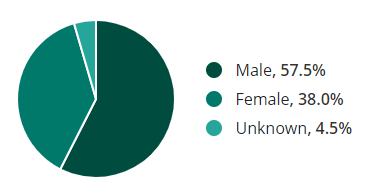
A recent Zippia report shows that 57.5% of CLOs are men, compared to 38.0% being women, as illustrated below:

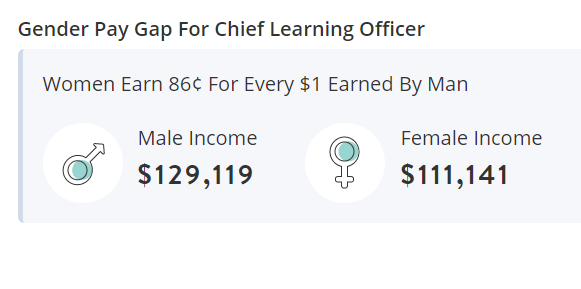
There’s also a corresponding disparity in their earnings, with men earning more than women.

Virtually all sectors can accommodate CLOs. The table below provides a breakdown in percentage of the top 5 industries:

IndustryDescription% Hired
Tech IndustrySoftware firms, big data analytics, and IT consulting companies16
Factory and manufacturingFood processing plants, beverage companies, and automakers12
HealthHealthcare and life sciences, for didactic information analysis11
FinanceBanks and insurance companies8
Non-profitCollaborate with external trainers and key partners and funders6

Table courtesy of zippia

Chief Learning Officers Love Quantic

A chief learning officer is a key player in an organization, and Quantic School of Business & Technology offers the best programs for CLOs.

CLOs who train at Quantic boast the best education experience where they undergo an interactive learning session to gain marketable skills from the available degree programs.

At Quantic, we believe that learning and knowledge are the driving forces behind adaptability. Furthermore, we encourage team learning, which entails training your workers on a large scale. 

Learners who’ve been trained in this fashion can quickly convey lessons learned from a scenario. This empowers a complete team to readjust.

Active Learning supplements team learning and ensures students take an active approach to coursework. That’s a more cost-effective and time-efficient way to teach your entire crew.

Book a call to educate your workforce collaboratively and at scale.

Chief Learning Officer Conferences

CLO conferences are opportunities to meet, grow, and connect with like-minded professionals. You stand to benefit from the workshops, presentations, and networking opportunities.

You might be interested in a few listed below:

  • CLO Symposium 2021: Dubbed “Resilient, Fluid, and Fearless: The Future of Learning,” this conference is virtual and will take place between October 5th and 6th, 2021.
    It involves case studies that show how organizations have pivoted and transformed during hard times, using innovation and strength.
  • Training Industry Conference and Expo: Nicknamed TICE, this online event brings together minds to discuss challenges and solutions in leading L&D teams. It takes place between September 28–30, 2021.
    This corporate learning event helps you network with others in an attempt to find solutions to Learning and Development (L&D).
  • Learning Technologies Brings together top performers in learning from around the world. It recognizes enthusiasm, passion, and commitment to learning technologies around the world. Their awards ceremony takes place on November 17, 2021.
  • Corporate Learning Network Helps you benchmark with the top guns in Learning and Development. It involves the use of L&D to future-proof and grow organizations. They have a conference running every year. 

How to Become a Chief Learning Officer

As a chief learning officer, you’ll work in a variety of organizational settings and industries, so there isn’t one particular educational path to CLO certification or licensure.

Chief Learning Officer Education

A CLO typically needs a bachelor’s degree in subjects like human resource management and business administration, though a professional certification and/or a graduate degree boost employment prospects.

A certification shows an employer that an individual has learned specific skills and met course requirements.

Expertise in information technology is an added advantage since many L&D portals are computer-based. Other topics such as behavioral psychology, educational philosophy, and instructional design have also proven beneficial.

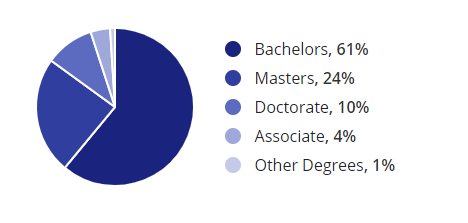
The graph below shows a breakdown of CLO degree levels for those currently in practice.

A cross-section of employers prefer applicants who have professional certifications from industry organizations. 

These organizations offer leadership development and learning design, aimed at enhancing career development. Such organizations include the American Society for Training and Development.

A CLO’s career path involves working with people. A recent study reveals the following about CLOs:

  • They spend at least seven years working in other careers before taking up the position of CLO. This normally includes positions such as:
    • Vice President (five years)
    • Director of Learning and Development (four years)
    • Managing Director (three years)
    • Editor(five years)
  • Their top fields of study include the following:
MajorNumber of CLOs
Bachelor of Arts24.4%
Bachelor of Science16.6%
Master of Arts10.4%
Master of Science9.1%
Doctor of Philosophy9.1%
Master of Business Administration8%
Other5.4%
  • Subsequent positions for CLOs include: 
  • Vice President (three years)
  • Executive Director (three years)

Chief Learning Officer Resume

A CLO’s resume should showcase the relevant skills and work history that aligns with the job at hand. Exposing relevant achievements will help you stand out. 

Follow the steps below to create an appealing resume:

  • Format your resume: Make sure it is clear and easy to scan and read. Ensure your contacts are prominent. Also, use bold and clear headings, and present your portfolio items in chronological order.
  • Craft a professional objective or summary: Use a resume objective if your CLO experience is less than two years. Otherwise, create a resume summary.
  • Begin at your current job: List your work experience from the most recent position occupied. Start with the title, then follow it with employment dates, the name of the organization, and your experience in five bullet points.
  • Add your education level and coursework: This should be relevant to the position and stand out as much as possible.
  • Proofread your resume: Look out for spelling mistakes, grammar, and other issues. Ask someone else to check it out as well.
  • Attach a cover letter: Give a powerful and eye-catching introduction, executive experience, and relevant expertise. Don’t forget your skills and achievements. Finish off with an impressive statement.

Chief Learning Officer Salary

According to the US Bureau of Labor Statistics (BLS), training and development managers earned an average annual wage of $115,640 in 2020. There is an expected growth in the field between 2020 and 2030, which is higher than the average for all occupations.

Quick Facts: Chief Learning Officer Annual Payment
Medium Pay (2020)Annual: $115,640
Hourly: $55.60
Entry-Level EducationBachelor’s Degree
Former Work ExperienceFive years and more
On-the-job trainingNil
Total Jobs in 202042,100
Job Direction, 2020–203011% (exceeds average)
Employment shift, 2020–20304,500

A Zippia research study has further proven that masters and MBA holders command the highest average annual salary, which is around $144,658. Please refer to the comparison graph below:

It takes time and effort to create a motivated workforce that uses learning to solve today’s challenges. You need a solid Learning and Development culture that provides your team with the skills they can learn and use to meet your organization’s objectives.

At Quantic, we are strong believers in learning as the strongest driver to up-skilling. Furthermore, our curriculum encompasses team learning, which helps train your workforce at scale. In this way, learners can share lessons learned, thereby benefiting themselves and the entire team.

Active Learning is Quantic’s method. It places the student at the center of the digital learning experience. They only move ahead after properly mastering the previous skill, and give feedback every eight seconds of going through our video course.

Quantic offers a collaborative framework to help your organization’s employees learn quickly and efficiently. 

Training Request Letter for Career Development: Sample Letters Inside

Hiring employees is one thing, but getting them to yield desirable results is the sum of many factors, including training. Writing a training request letter for career development can be a crucial step in securing the skills and knowledge you need to excel in your role. Proper training and professional development are indispensable to forward-thinking firms, and a well-crafted letter can help demonstrate the value of investing in employee growth. By effectively communicating your needs, you can align your training goals with your employer’s objectives, ensuring long-term performance and productivity.

A company needs to understand that employees are an invaluable resource and invest in employee training for long-term performance and productivity.

According to the World Economic Forum report, 50% of employees will need reskilling in four years. You might know that improving your proficiency will help you play your role better, but how do you convince your employer to support your training needs?

Here you can find out how to write a letter to your employer to ask for additional training and advance your career.

What Is a Training Request Letter?

A training request letter is a formal way to request your boss to fund training courses relevant to your work. For instance, if you’re a teacher, you might write a request letter asking for support and permission to attend training that you believe will enhance your students’ performance.

However, you need to be careful to express yourself without being misunderstood. A properly written request letter can turn the tide for your career. Apart from gaining more skills, if given the go-ahead, you’re better positioned to vie for a promotion in the future,

On the other hand, several things could go wrong, especially when your motives are not clear. Your boss might get the impression that you’re taking advantage of the company’s generosity to prepare yourself for an exit to a better-paying job.  

Tips for Writing Your Training Request Letter 

A training request letter is addressed to your company’s management, and its tone should be professional. As such, you should do whatever it takes to improve the chances of your boss granting your request. Here are some things you need to do before writing your training letter.

Choose Your Training Carefully

While many companies are happy to support their employees’ professional development, keep in mind that it can be a costly venture, and you need to choose a no-brainer course. Go for a program whose benefits for both you and your employer are clear. If possible, leverage scholarship opportunities to save money.

Keep in mind that not all courses translate to value. When your boss sees the potential ROI of investing in your training, they are highly likely to support you without much persuasion. Can you prove that you can apply what you will learn? Will you gain new, relevant skills for your role?

Quantic Learning provides a one-stop solution for learner-driven remote learning, with instructors ensuring their learners actively take part in learning while getting timely feedback to reinforce knowledge. Employers know that learning by doing is the key to the best results.

Present More Than One Option

Now that you know what type of training you need, consider including additional training options to allow flexibility in time and costs. The most common methods for professional development in the workplace include:

  • Workshops
  • Webinars
  • Seminars
  • Instructor-led training
  • Online courses

eLearning provides excellent alternative training programs from online MBAs to traditional learning methods, like instructor-led training. Learners can take lessons when convenient to them, and they don’t have to spend time traveling to attend class.

Again, Quantic Learning comes out as a practical option for additional training in the workplace. Quantic’s Online MBA program offers unrivaled flexibility, desirable to working professionals who don’t wish to quit their jobs. The program’s affordability and value will win over any employer.

What Does the Employer Get Out of It?

Before requesting training, you need to do your research and identify how it will benefit your employer. It’s imperative to highlight these benefits in your letter. Mention the skills you will gain and how they can impact your leadership style to propel your team to success.

Show Them a Clear ROI

Your employer needs to know that they are making the right move by supporting your training. 

You need to point out how you intend to leverage the skills you will gain. For instance, if you’re a marketing professional, you could mention how upskilling could help meet the goals set in your marketing strategy.

For instance, if you’re intensifying awareness of your product on digital platforms, it might not be possible without digital marketing skills. With improved digital marketing literacy, it’s only a matter of time before the company actualizes set objectives.

One way to prove training ROI is by measuring the outcomes effectively. You can come up with metrics whose benefits show the tangible results of your training. Some measurable indicators you can implement are as shown in the table below.

Metric Example
Increased productivityUsing fewer resources to achieve targets, e.g. finish a project with a smaller team
Better customer satisfactionIncreased positive online reviews
Business growthIncreased net income from sales 
Faster project turnaround periodsUsing less time to complete projects 

Do Your Research

Identifying your training needs is just the first step. A lot more goes into employee training. You will need to find time for learning, and your employer will need to facilitate it without interrupting the workflow,

Therefore, you need to look up several options and find the most cost-effective one. You can look up several online courses and list the best-reviewed yet affordable options. If you need technical training, you can attend an accredited certification course instead of a degree.

Read the reviews from students as this will give you the best understanding of the experience. Quantic students have even created their own reviews and shared their knowledge and exposure to the Quantic programs. 

Express Your Loyalty / Commitment to the Company

Nobody likes feeling short-changed, and employers are no exception. If they agree to fund employee training, it’s because they want to reap the benefits. You need to make it clear that you intend to stay committed and use your newfound skills for the company’s good.

Get Help From Other Professionals

The professional world is highly dynamic, and there is a vast selection of courses available. If you’re unsure of what would best suit your needs, you can consult other professionals who’ve been in the field for a longer period. They are in a vantage position to recommend the most relevant options available.

Letter Format for Training Request

Like every other formal letter, there are acceptable formats when writing a letter to request training. Here is a simple guide:

Salutation {Dear Sir/Madam}
{Introduction — state the purpose of the letter (request for training) and reasons for the training}
{List of options and fees}
{Make your pick and show how it would help the company}
{Conclusion — show appreciation}
{Yours Sincerely}{Your Names}

Training Request Letter Sample

Here is a sample training request letter. 

Dear Madam,
RE: Request for Further Training

I am writing to request your consideration for advanced training that would help us save more money and time.

Having worked in technical support for over three years, it’s essential to constantly update and improve my skillset and steer the company to greater heights. I believe that learning Web App development will reduce our costs when developing native apps on Android or iOS. It will also make workflow go much smoother.

I have come across several trainers offering this course, and  a few I find reasonable include:Creating Web Applications With Go by Pluralsight —$239 annual accessJava Bootcamp: 10 Web Application Development Projects — $13.99

Creating Web Applications with Go by Pluralsight is my top pick for the unmatched flexibility it provides. There is ample time to master everything and pass the knowledge to my team with one year’s access.

Thank you for considering my request to attend training. I feel confident that we can share the knowledge with fellow staff members and managers alike if given the opportunity.

Sincerely,
Florence Doe

More Letter for Training Request Examples

Various scenarios will require you to write training request letters. A few of these are highlighted below.

You’re a Manager Faced With Onboarding Problems

When you are in charge of new employees, it can be challenging to get started. Requesting onboarding training could make things easier. You simply need to use the sample request letter format above and make adjustments accordingly.

Dear [Manager’s Name],

I am writing to request training on onboarding procedures. As a manager, I have faced challenges in properly onboarding new hires, which has resulted in low productivity and poor employee retention rates.

Through my research, I have discovered that proper onboarding procedures can greatly impact the success of new hires. I believe that with the right training, I can improve my onboarding process and ultimately create a more productive and successful team.

I am requesting training that will cover the following topics:
1. Best practices for onboarding new hires
2. Strategies for effective communication with new hires
3. Creating an onboarding plan tailored to the needs of each new hire
4. How to evaluate the success of the onboarding process

I am open to attending any type of training that you recommend, including workshops, seminars, or online courses. I understand that the company has limited resources for training, so I am willing to work with you to find a cost-effective solution.

Thank you for your consideration of my request. I believe that by improving our onboarding process, we can create a more successful and productive team.

Sincerely,
[Your Name]

You’re a Supervisor Faced With a Professional Development Problem

As a supervisor, you might have a skill gap problem in your team that you can easily address through additional training. With the above sample letter, you’re good to go. Just make sure you state the specific training they need—for instance, SEO training for your digital marketing team.

Dear [Supervisor’s Name],

I am writing to request training on a specific area of expertise that is currently lacking in my team. As a supervisor, I have identified a skill gap that is hindering our ability to achieve our goals and I believe that with the right training, we can improve our performance and enhance our results.

After conducting an assessment of my team, I have discovered that we lack adequate knowledge and skills in the area of [specific skill gap]. I believe that by investing in training in this area, we can increase our effectiveness and better serve our customers/clients.

I am requesting training that will cover the following topics:
[Topic 1]
[Topic 2]
[Topic 3]

I believe that this training will provide my team with the necessary knowledge and skills to excel in their roles and meet our objectives. By improving our [specific skill gap], we can increase our efficiency, productivity, and overall success.

Sincerely,
[Your Name]

You’re an Employee and Request Additional Training for Your Role

For instance, you’re a software developer who has seen the need for additional training in React to help boost your performance. Mention the training company you’d prefer and why you think it’s necessary. 

Upskill With Quantic Learning

Alt: Upskill with Quantic

Quantic offers a practical solution for additional training in the workplace—all with the bonus of being more affordable than other programs out there and more applicable to an actual working environment. 

If you’re looking to invest in your employees, Quantic’s programs can help them stay ahead of the curve. Our focus on real-world applications means you are learning skills relevant to your current job or industry. Find out more about how we help employers and employees keep up with change by contacting us today.

If you’re considering programs that offer flexibility, affordability, and real-world applicability, Quantic’s innovative approach to education is worth exploring. Many professionals, like Emily Stone, Miguel Mayorga, and Garry Sands, have shared their transformative experiences completing the Quantic Executive MBA. From expanding global horizons like Rishabh Bitola to personal growth stories like Onyeka Okonkw and Kamila Tocicka, Quantic alumni consistently highlight the program’s ability to combine cutting-edge learning with career advancement.

Beyond personal stories, Quantic students and alumni have shared glowing reviews on Trustpilot, emphasizing the program’s innovative curriculum, flexibility, and real-world impact. To explore these firsthand accounts, visit Trustpilot Quantic Reviews and see how Quantic has helped learners achieve their professional goals.

For a deeper dive into Quantic’s offerings, explore trusted third-party reviews and stories that evaluate the program’s curriculum, admissions process, and outcomes:

These resources provide detailed insights into how Quantic is shaping the future of business education, helping professionals like you take the next step in your career journey.

Related article: